Ryan Wilkes has filmed on all seven continents and his cinematography can be seen in many documentaries made for major networks such as CBC, PBS NOVA and ARTE. He is currently in post-production on a new short documentary supported by the My World Film Fund and Re:wild about the hunt for a lost bird species led by self-proclaimed kōkako addict, Rhys Buckingham, who has spent 40+ years searching for evidence of the species’ existence in New Zealand.
How did you first hear about Rhys Buckingham, and what made you want to tell his story?
I lived in New Zealand from 2015 to 2020 while doing my PhD in bioengineering, and that’s where I accidentally became a filmmaker. Weekend adventure videos for YouTube turned into videography work on conservation campaigns, and somewhere along the way I fell hard for New Zealand’s birds. One of my friends from those years, Geoff Reid, met Rhys by chance in the bush while both of them were chasing up the same kōkako report. Since then Geoff has been in the field with Rhys many times. I came across Rhys’s story during a visit to New Zealand in 2025, and immediately had the feeling that this was a story worth telling. Geoff introduced us, and Rhys, who is quite selective about who joins his expeditions, gave me the green light to join him in April 2026.

I wanted to tell this story because it’s a beautiful example of the resilience of the human spirit. The big question I had in my mind during the making of this film was: how does someone refuse to give up hope in the face of extreme odds? Rhys is a rare human being who has given so much of his life to the search for this incredible bird, and I think we need more examples of people who fight for what they believe in, regardless of the odds. It’s so easy to become overwhelmed by the doom and gloom that is pushed in our faces every day, but how does one stay the course?
You’ve had the chance to join the search for a bird that hasn’t been seen in nearly 20 years. How does it feel to have had that experience?
Rhys has been searching for the South Island Kōkako for 45 years. At 78 years old, his days of searching the remote forests of New Zealand are coming to an end, so I thought it would be important to document what may be some of his last trips into the backcountry. Getting to spend time with Rhys in the field was an honor. He is a true master of the bush. Seeing the way he navigates the forest, gets tuned into the birds, and notices the slightest variations in their calls was mind-boggling. I quickly got the feeling that he feels more at home in the bush than anywhere else.
Why is the South Island Kōkako such a compelling lost species?
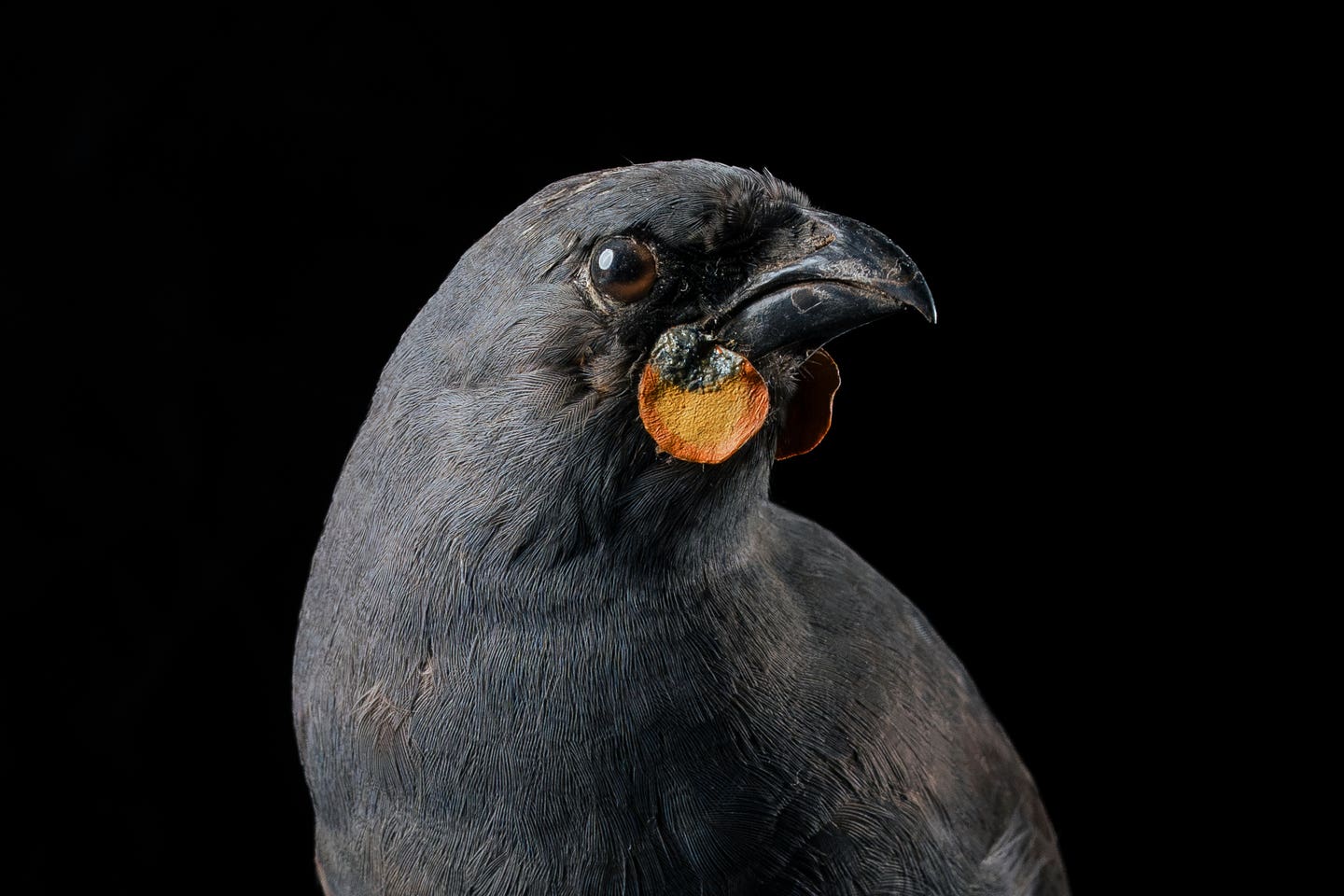
For me, the lore of the South Island Kōkako begins with its hauntingly beautiful call. Rhys, who says he has heard the bird as recently as 2025, compares one of the bird’s calls to a cathedral organ. He says that once you’ve heard it, you’re hooked for life. It’s a rather large, dark blue-grey bird that has been called the “grey ghost” because it’s so hard to pin down. Rhys often says that this bird behaves as though it doesn’t want to be found. It was declared extinct in 2008, then reclassified as data deficient in 2013 after a 2007 sighting was officially accepted. So today it sits in limbo: not gone but not confirmed either. People continue hearing it and glimpsing it in some of the most rugged, least-explored forest in the country, but no one has been able to provide proof that it’s there. There are no photos or videos of the bird in existence today. It’s on Re:wild’s Most Wanted Lost Species list for good reason.

Why does proof matter so much?
You can’t protect what doesn’t officially exist. Without confirmation, there’s no case for the kind of large-scale predator control and habitat preservation that brought the South Island kōkako’s relative, the North Island kōkako, back from the brink. Proof would change that. It would unlock funding, focus conservation in the right places, and give any surviving birds a chance before predators and habitat destruction erase the species. Rhys knows this better than anyone. It’s why he, and many others involved with the South Island Kōkako Charitable Trust, keep setting camera traps, combing through countless hours of audio recordings, and following up on reported sightings. Finding the bird is the first step toward saving it.
What have been your greatest challenges — and wins! — on this particular project?
The first thing that comes to mind was the challenge of working in remote areas with an extremely small team. I had to carry all of my camping gear, food, and camera equipment into our backcountry locations myself. Hiking with two backpacks stacked on each other for 7 hours is not fun!
Another challenge was condensing 45 years of stories and experiences from Rhys into a 20-minute film. Actually, condensing is not the right word to describe the process…it’s more about taking in everything that Rhys shared with me, and then carefully curating a cohesive story that I believe will be engaging, have the desired impact, and remain true to Rhys.
The biggest win is having made a film that shines a light on an initiative as important as the Search for Lost Species. I am so excited to share it with the world, and to see how audiences connect with it.
I am also very happy to have made another film that I am proud of. That’s a huge win for me.

The Search for Lost Species is something Re:wild is known for...why do you think it resonates so much with the public? How does it resonate with you?
Many mainstream environmental stories are about what we’re losing. The Search for Lost Species is about what we might find — what could still be out there. That is so exciting to me! And bringing attention and resources to the search for these species is working. There have been some incredible rediscoveries in recent years.
Hunt for the Grey Ghost tells the story of one man who hasn’t given up on the lost species in his own backyard, but the Search for Lost Species is full of examples of what people can achieve when they hold onto hope in the face of extreme odds. And with biodiversity disappearing as fast as it is, we need that hope more than ever. I’d love for this story to inspire people around the world to fight for their local ecosystems before species begin to disappear, and to keep searching for their own lost species.
What do you hope audiences take away about hope?
I don’t want to give too much away about the film, but what I can say is that Rhys isn’t naive about the odds of finding the grey ghost, and yet he keeps showing up, packing his bag, walking for hours into the bush, listening, recording and watching. I think most people see hope as a rather passive state of feeling, of yearning. After spending time with Rhys, my own definition of hope has been expanded. I now see hope as something you actively do, not just something you feel, and something worth doing even without a guaranteed outcome.
Where and when can people see the film?
The film is in the final stages of post production, and will be released in 2027. To stay up to date follow along on IG @huntforthegreyghost where I’ll be posting BTS content, festival and screening announcements, and more!
Ryan Wilkes is a documentary cinematographer and director focused on exploring the natural world and our place within it. With a PhD in Bioengineering and experience as a materials scientist, he approaches subjects with both artistic and scientific curiosity. He shares his work with an audience of over 190k followers on @itsryanwilkes.