Sumatran Rhinos

Fewer than 80 Sumatran Rhinos survive in Indonesia's fragmented forests. Learn about the world's smallest rhino species and how Re:wild is working to save it from extinction.

Support Rhino Conservation
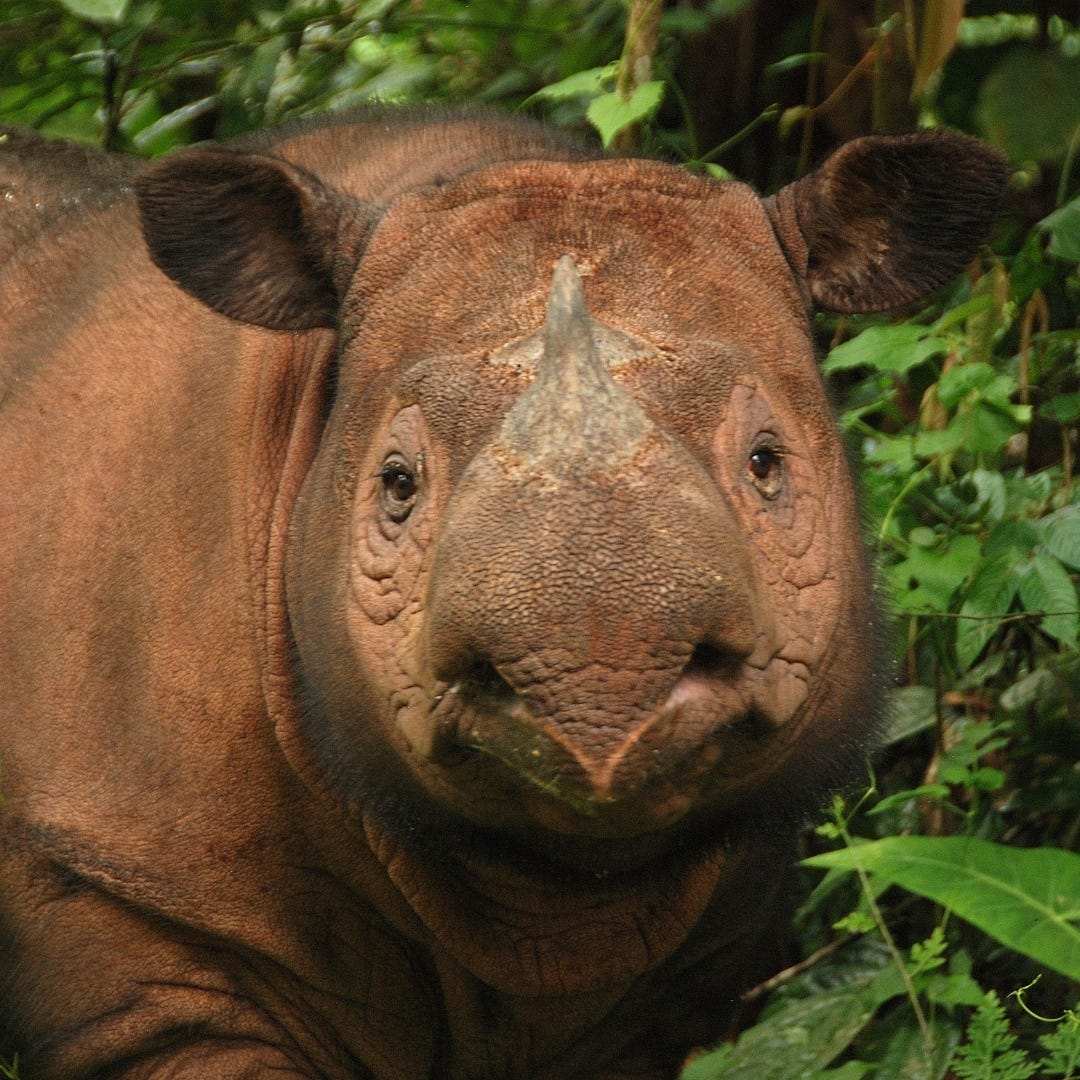
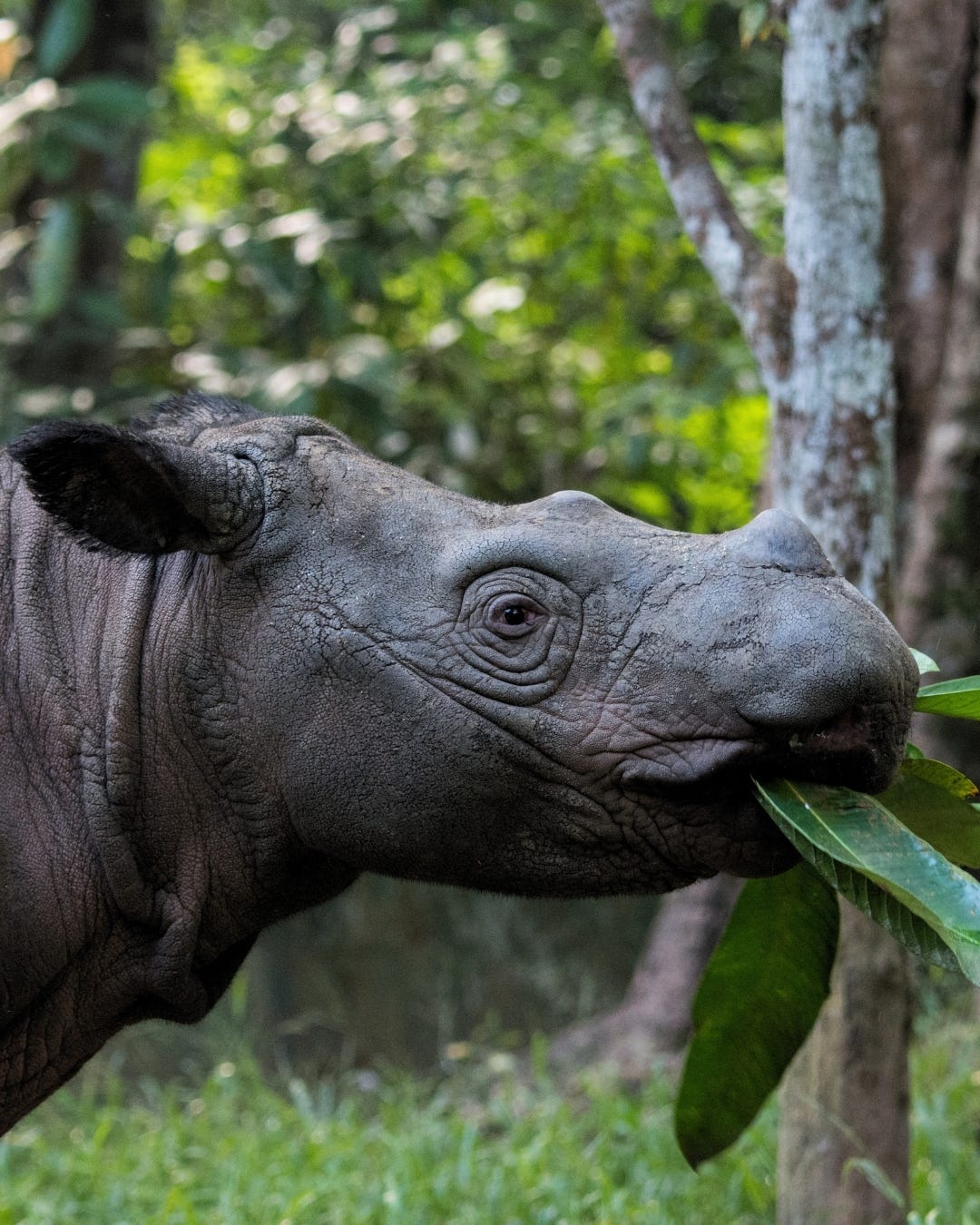
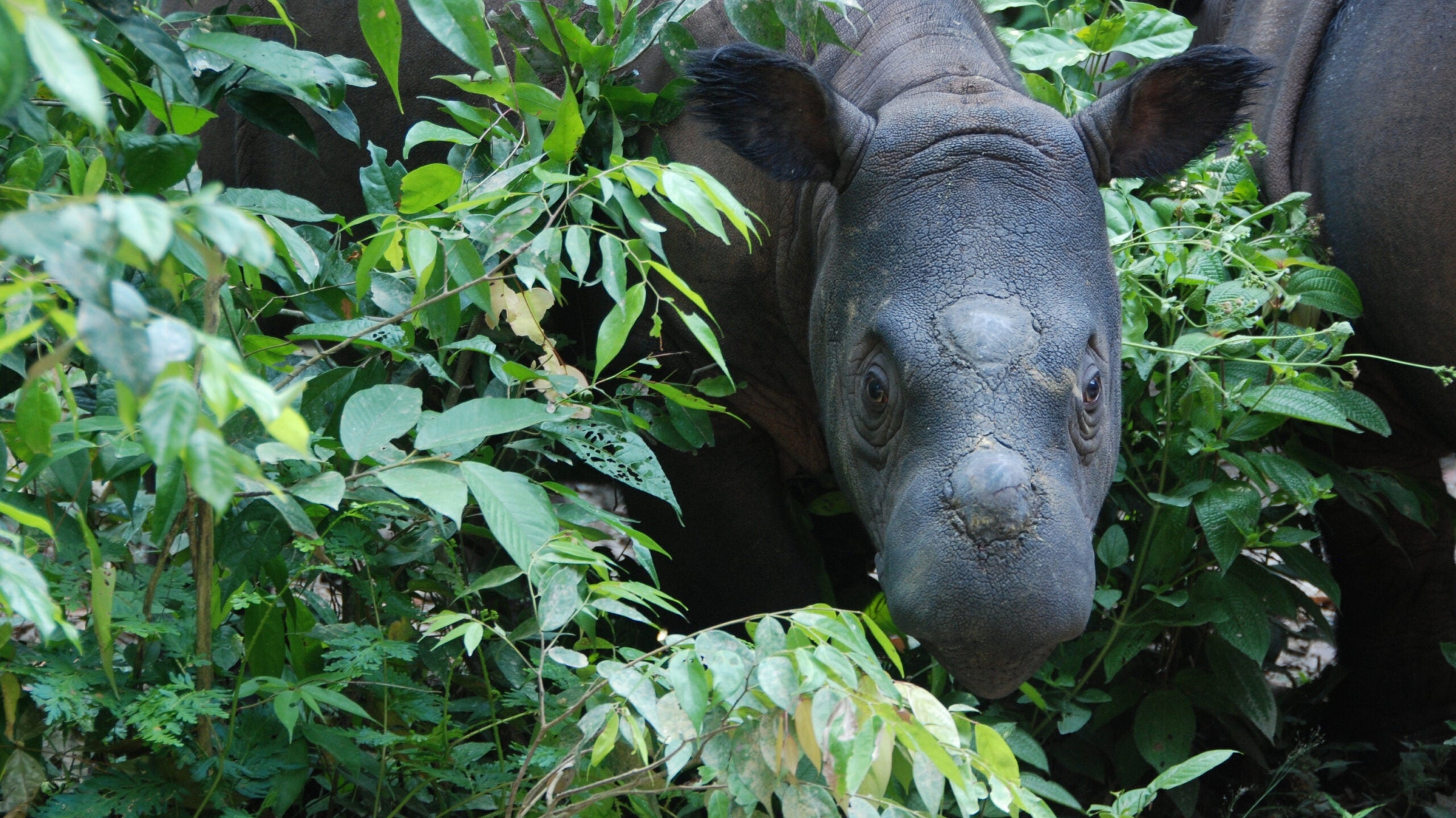
The Sumatran Rhino is unlike any other rhino alive.
Covered in reddish-brown hair, built smaller than its African cousins, and more closely related to the long-extinct woolly rhinos than to any species alive today, it is a genuinely ancient animal.

Fewer than 80 survive, all of them in Indonesia.

This page covers everything we know about them, and everything Re:wild and partners are doing to make sure they have a future.

Sumatran Rhino Facts at a Glance

  • Scientific Name

    Dicerorhinus sumatrensis

  • IUCN Status

    Critically Endangered

  • Population

    Fewer than 80 individuals

  • Weight

    1,100 to 2,200 pounds (500 to 1,000 kg)

  • Height

    3.5 to 4.8 feet at the shoulder (1.1 to 1.5 m)

  • Lifespan

    35 to 40 years

  • Diet

    Browser; feeds on fruit, bark, leaves, and shoots across more than 100 recorded plant species

  • Habitat

    Dense tropical rainforest, lowland swamps, and montane forest

  • Range

    Sumatra and Borneo, Indonesia

The Sumatran Rhino is the smallest of the five living rhino species, though "small" is relative.
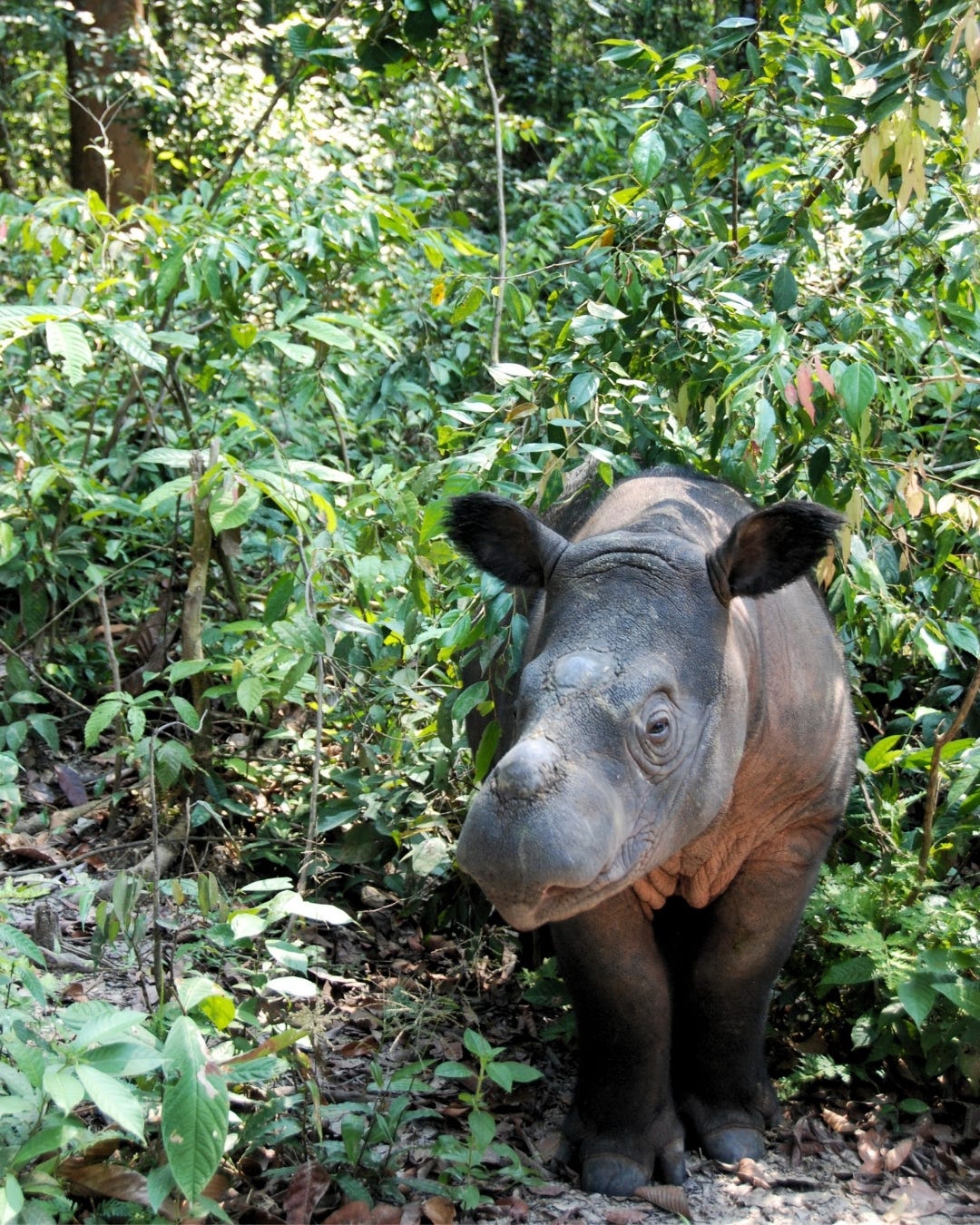
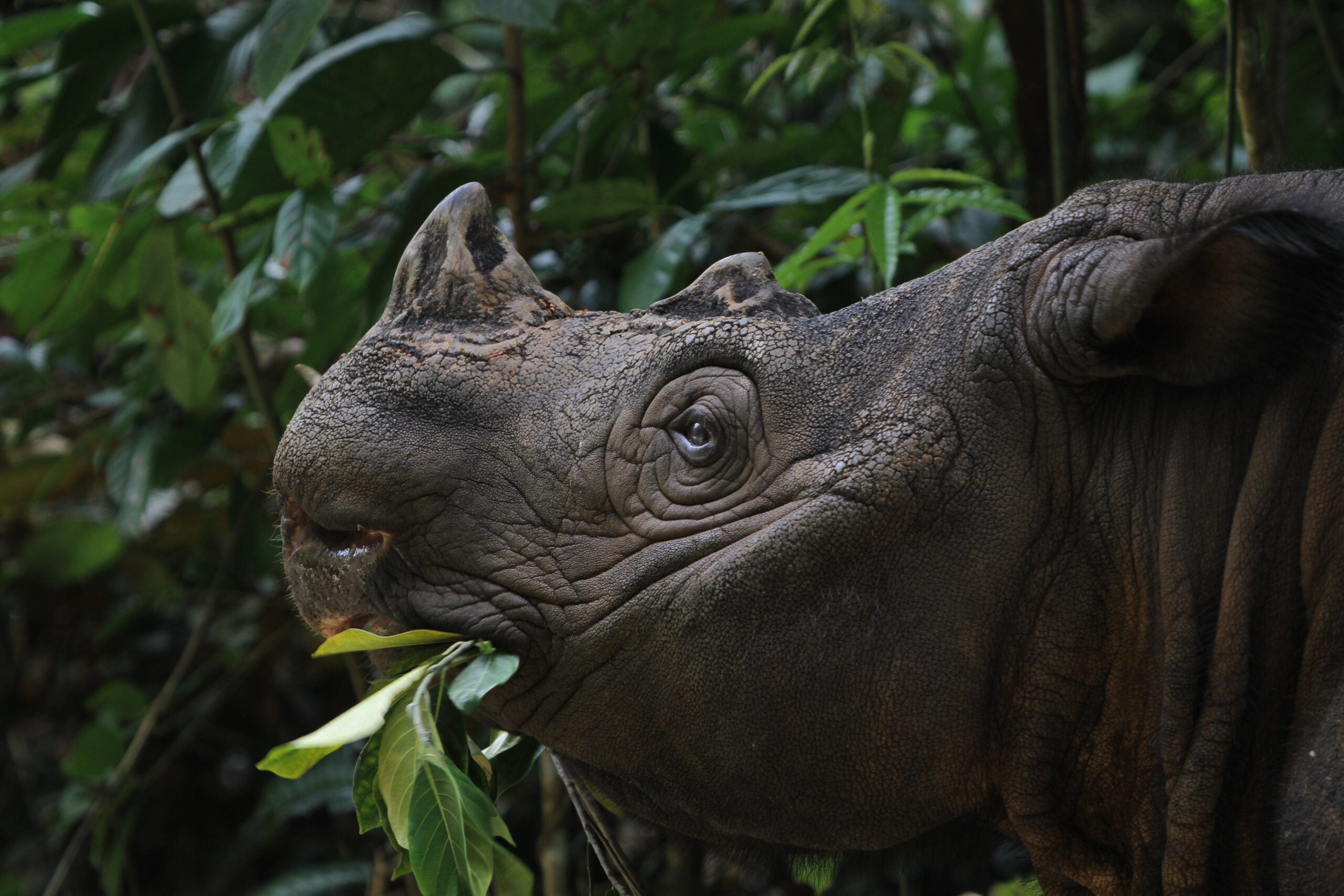
Adults can weigh up to a thousand kilograms. A coat of reddish-brown hair covers most of the Sumatran Rhino's body, a feature that makes it unlike any other living rhino and links it evolutionarily to the long-extinct woolly rhino. It is also the only rhino species in Asia with two horns.

Sumatran Rhinos are solitary animals. Males and females both maintain home ranges, which overlap. When rhinos do meet, they do not remain together for very long. They mark their trails with urine, feces, and scraped soil as signals for passing rhinos.

They are browsers and opportunistic feeders with a varied diet that may include more than 100 plant species. They live between 35 and 40 years. Gestation lasts approximately 15 to 16 months, and females give birth to one calf about every three years.

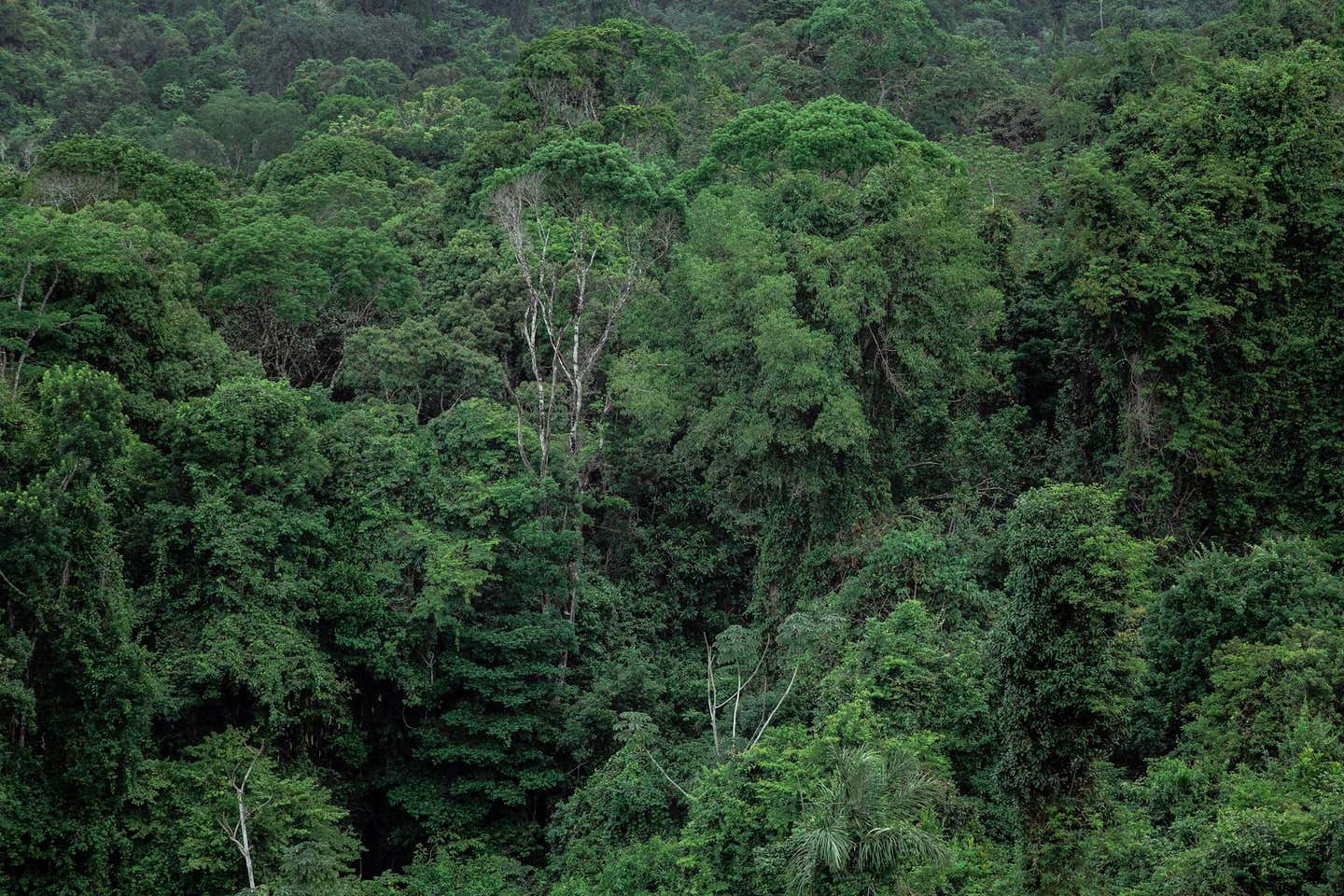
The Sumatran Rhino lives in dense tropical rainforest, from lowland swamps to montane forest.

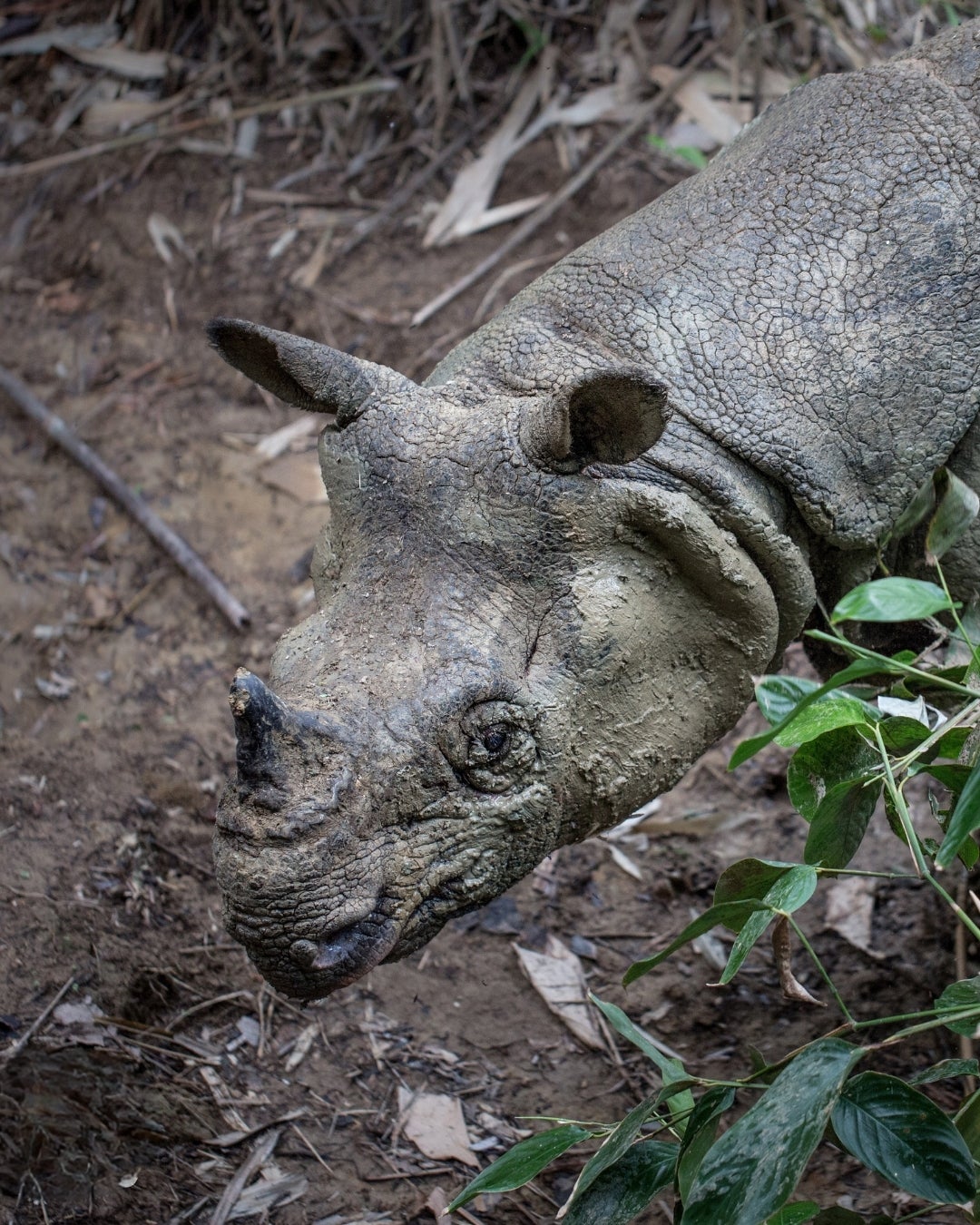
They prefer lower altitudes, or at least flat terrain at higher altitudes, but their habitat ranges from lowland swamps to montane forests. Like all rhinos, they depend on mud wallows to regulate body temperature, protect their skin, and reduce parasite loads. When natural wallows are not available, they create their own.

The Sumatran Rhino once inhabited rainforests, swamps, and cloud forests across India, Bangladesh, Myanmar, Laos, Thailand, Malaysia, Indonesia, and southwestern China. Hunting and deforestation over centuries reduced that range to a fraction of its former extent.

Today, all remaining wild individuals live on the Indonesian islands of Sumatra and Borneo.

Sumatran Rhinos face three primary threats, each compounding the others.
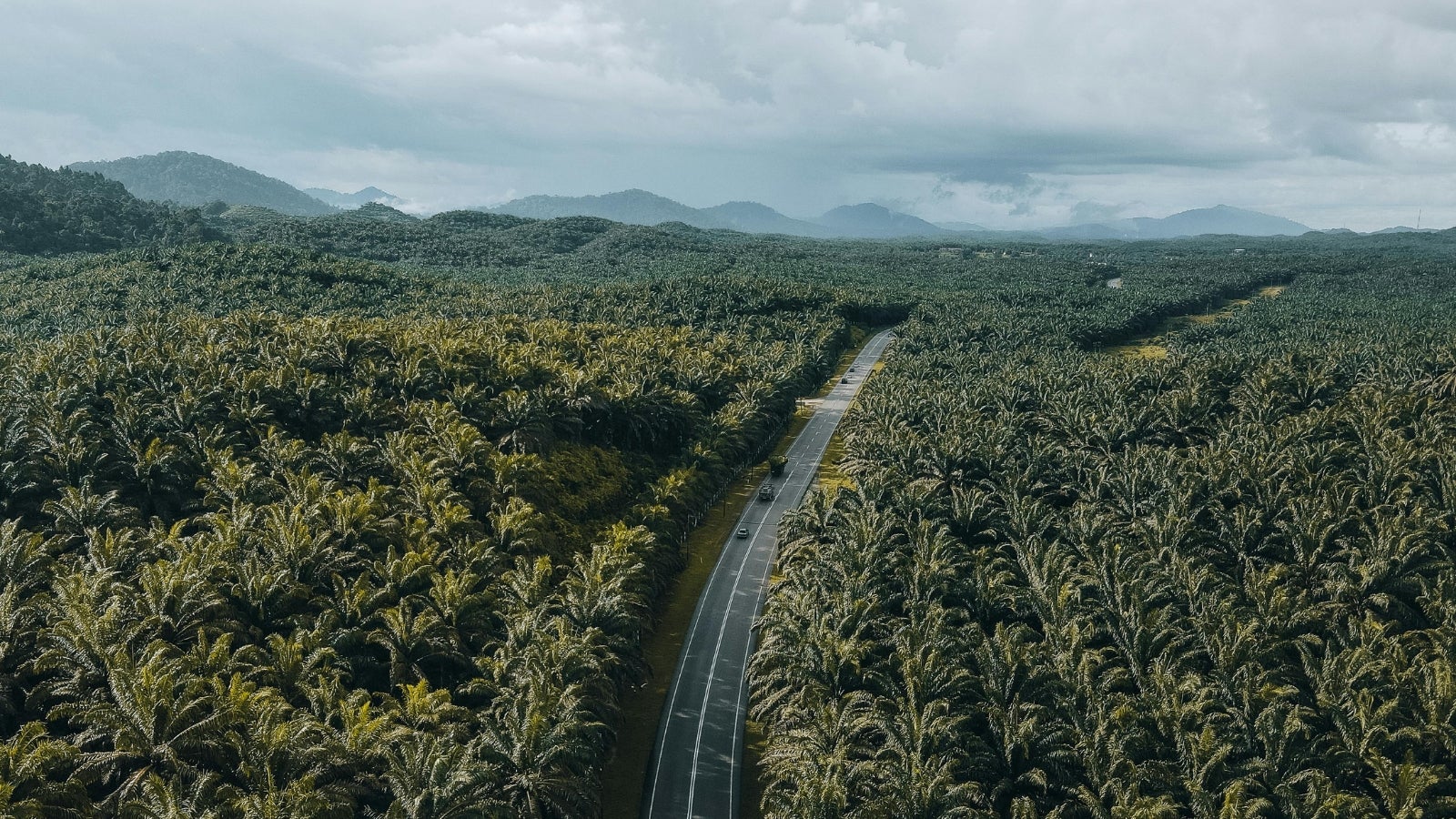
  • Isolation

    Outside of a single breeding wild population, all other wild rhinos live in small isolated populations, and isolated animals cannot find mates or breed.
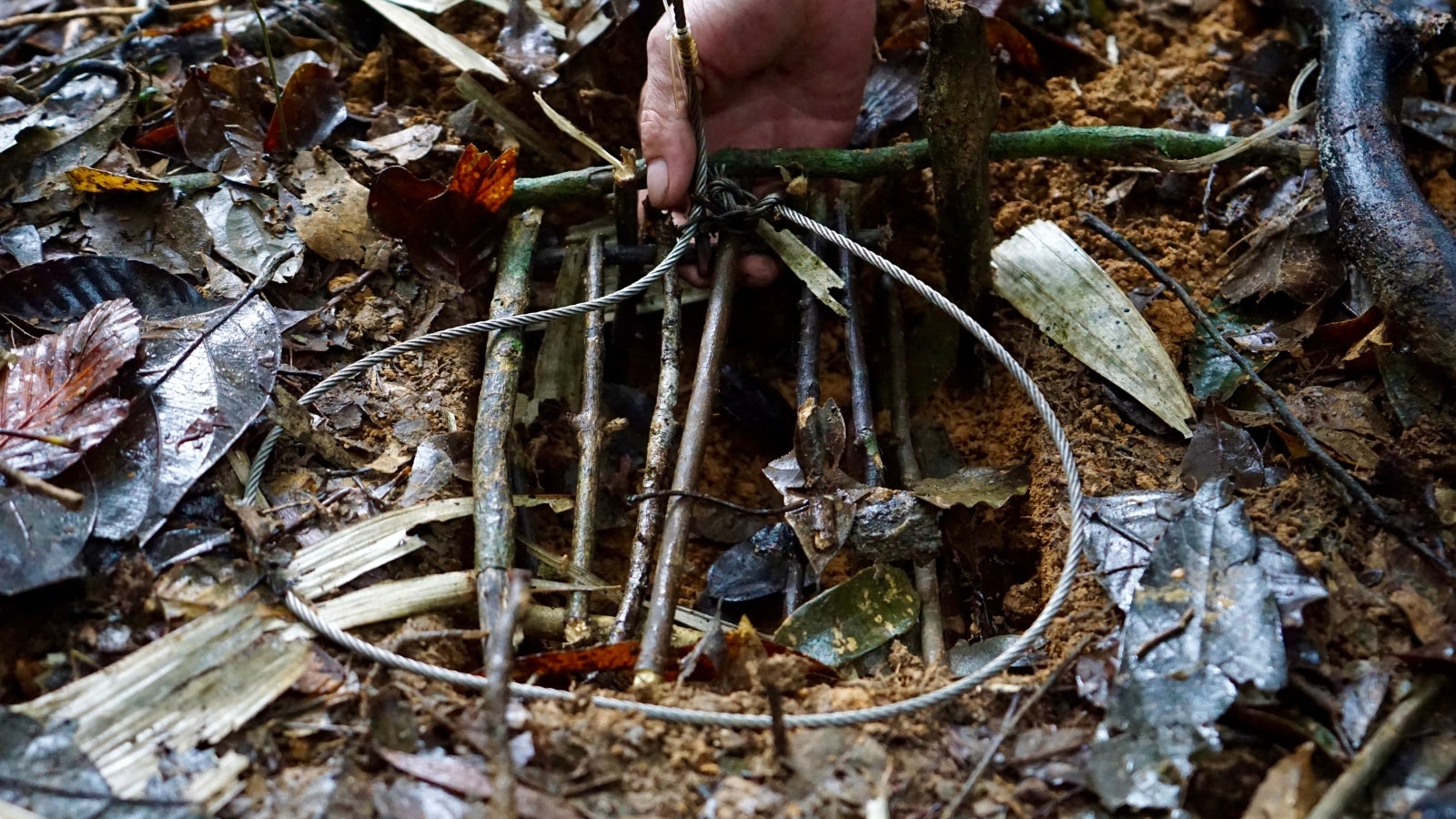
  • Poaching

    Despite being illegal, poaching of rhinos and the trade in their horns continues, driven by the demand for rhino horn putting every surviving individual at risk.
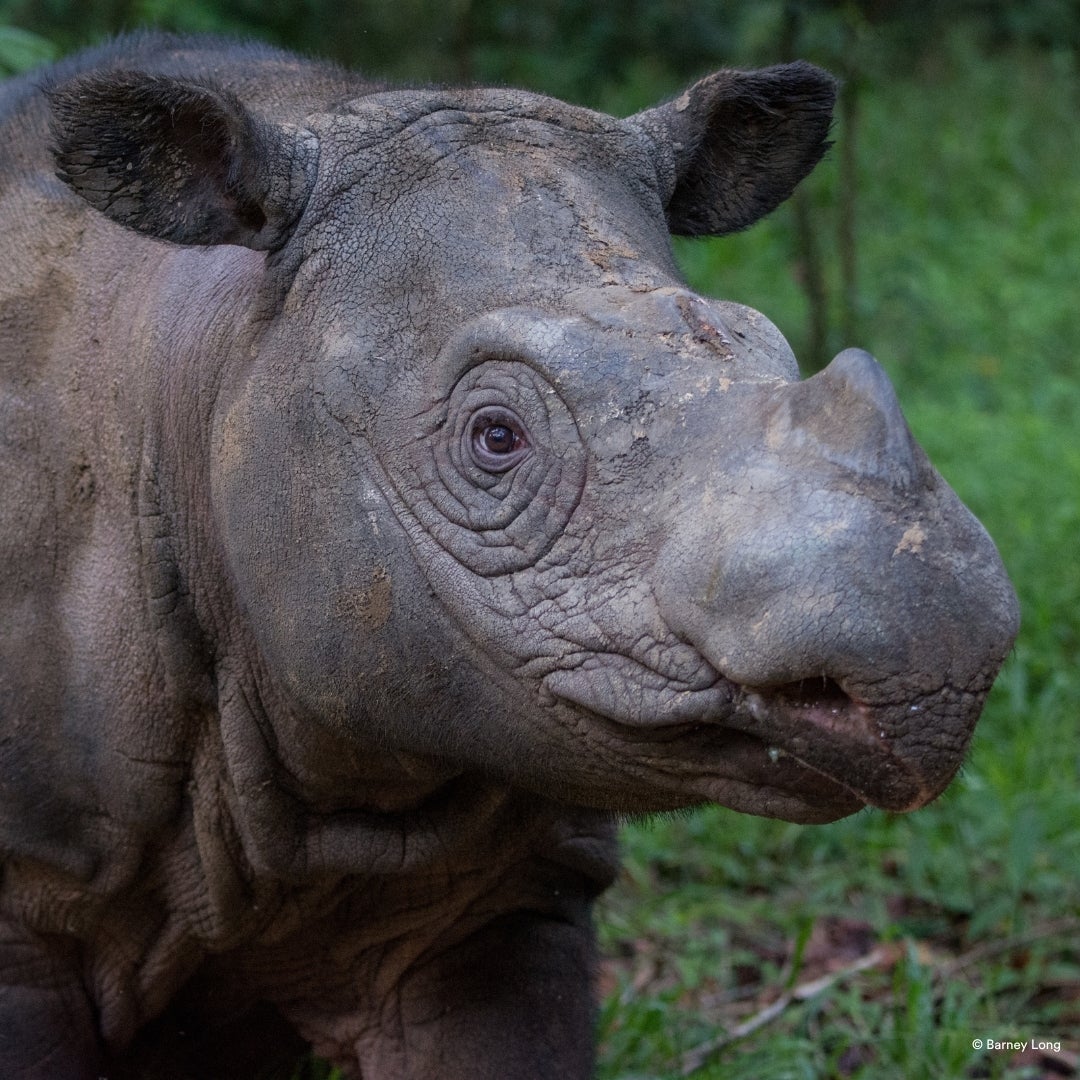
  • Inbreeding

    The populations are too small to survive over the long-term and require active intervention to recover.
Re:wild and partners are racing to bring isolated rhinos together before it's too late.

The most urgent problem facing Sumatran Rhinos is its population size and the isolation of individual rhinos. Isolated animals cannot find mates, cannot breed, and cannot sustain a species on their own. The solution is to bring them together.

Re:wild and partners are supporting the government of Indonesia and local conservation partners in building a single, coordinated national conservation breeding program, one designed to maximize births, preserve genetic diversity, and eventually return a self-sustaining population to protected wild habitat.
  • white circle

    Expanding facilities

    Breeding centers across Indonesia are being upgraded with the infrastructure and trained personnel needed to care safely for a growing number of animals.

  • white circle

    Reproductive science

    Assisted reproductive technologies and stem cell research are capturing genetic diversity from animals that cannot breed naturally, ensuring no lineage is lost.

  • white circle

    Protecting wild animals

    Every wild Sumatran Rhino still in the forest is protected from poaching. Each individual is irreplaceable to the genetic health of the species.

  • white circle

    Working toward return

    The breeding program is a bridge, not an endpoint. The goal is a population strong enough to return to protected wild habitat for good.

Our partners in rhino conservation. Click or tap a logo to visit their site and learn more about their work. .logo-strip { display: flex; flex-direction: column; align-items: center; gap: 20px; padding: 40px 20px; width: 100vw; margin-left: calc(-50vw + 50%); box-sizing: border-box; } .logo-strip .section-title { color: #000; text-align: center; margin-bottom: 8px; } .logo-strip .section-subtitle { color: #000; text-align: center; font-size: clamp(16px, 2vw, 20px); margin-top: 0; margin-bottom: 20px; } .logo-strip-logos { display: grid; grid-template-columns: repeat(5, 1fr); gap: 20px; justify-content: center; width: 100%; max-width: 1600px; margin: 0 auto; } .logo-strip-logos .logo { display: flex; justify-content: center; align-items: center; background: #fff; border-radius: 16px; padding: 12px; box-shadow: 0 6px 20px rgba(0,0,0,0.08); transition: transform 0.25s ease, box-shadow 0.25s ease; text-decoration: none; width: 100%; aspect-ratio: 3 / 2; } .logo-strip-logos .logo img { width: 100%; height: auto; object-fit: contain; border-radius: 16px; transition: transform 0.3s ease, filter 0.3s ease; } .logo-strip-logos .logo:hover img { transform: scale(1.05); filter: brightness(1.1) contrast(1.05); } .logo-strip-logos .logo:hover { box-shadow: 0 12px 30px rgba(0,0,0,0.15); } @media (max-width: 767px) { .logo-strip-logos { gap: 10px; } .logo-strip-logos .logo { width: 120px; padding: 8px; } }

Our partners in rhino conservation.

Click or tap a logo to visit their site and learn more about their work.

Stay in touch.

Get exclusive stories, behind-the-scenes updates, and ways to help—delivered to your inbox.

Donate for the wild.

Support real conservation impact—saving species, restoring ecosystems, and rewilding our world.

Donate