Javan Rhinos
Less than 100 Javan Rhinos survive in a single national park in Indonesia. Learn about this Critically Endangered species and how Re:wild and partners are working to recover it.
Support Javan Rhino Conservation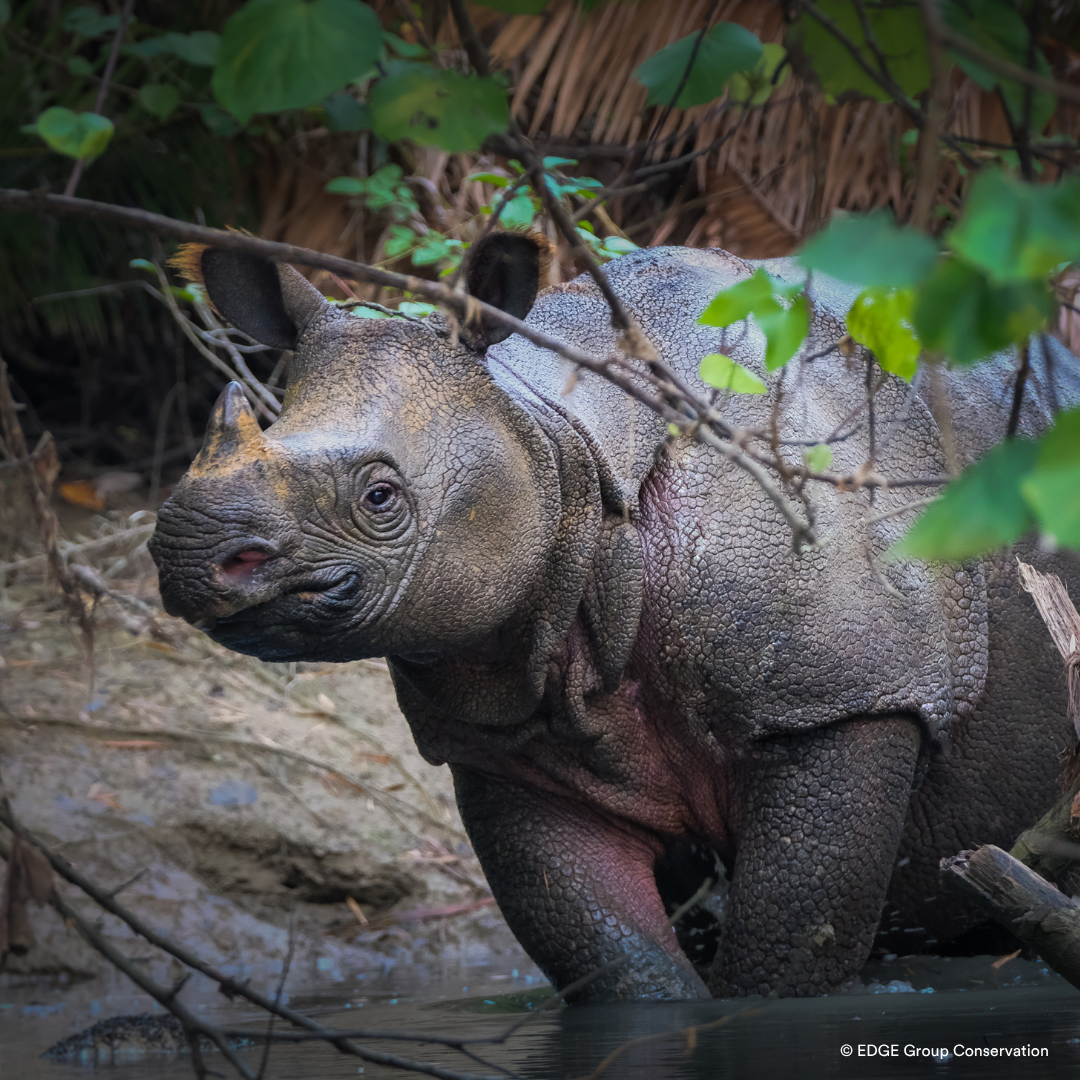
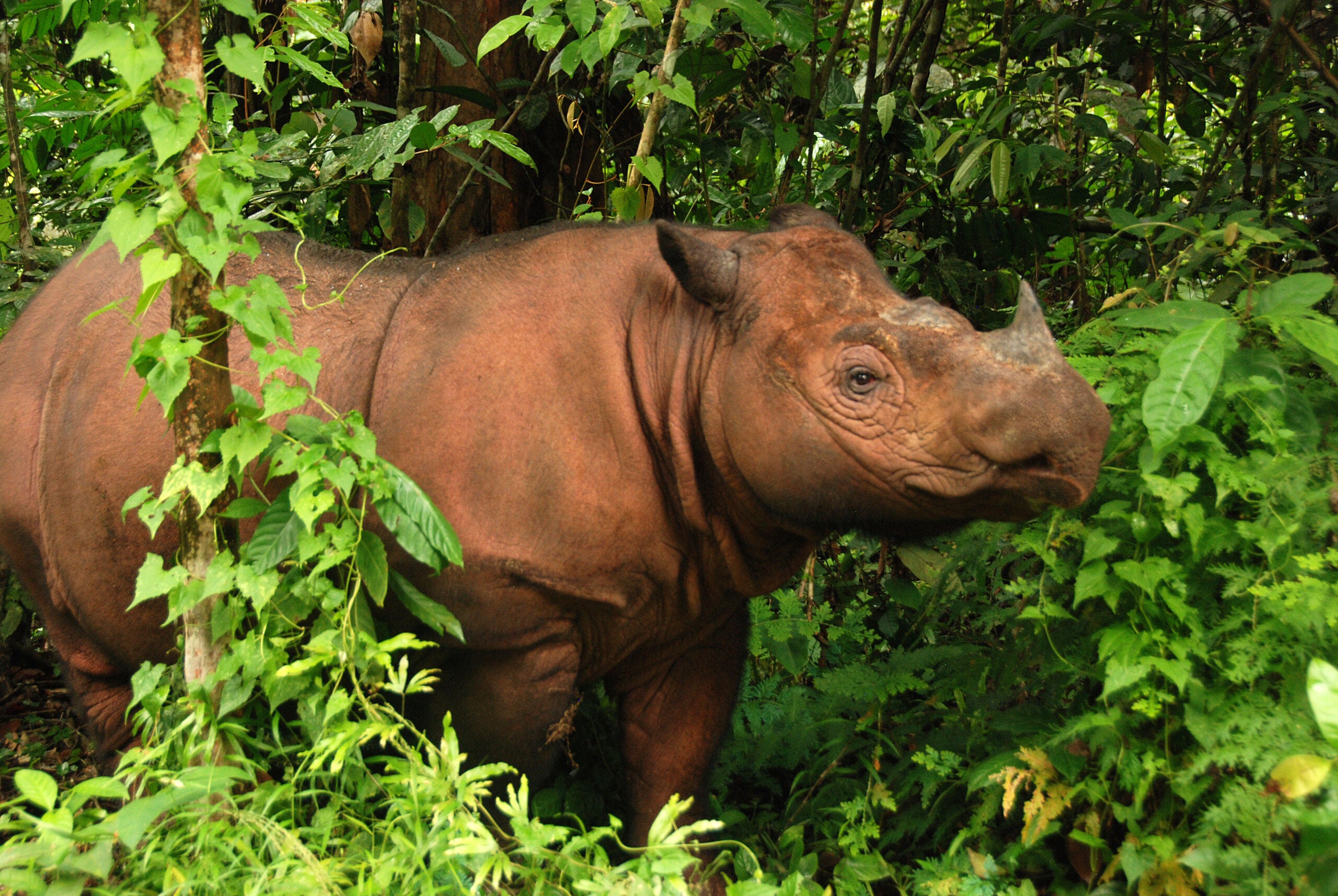
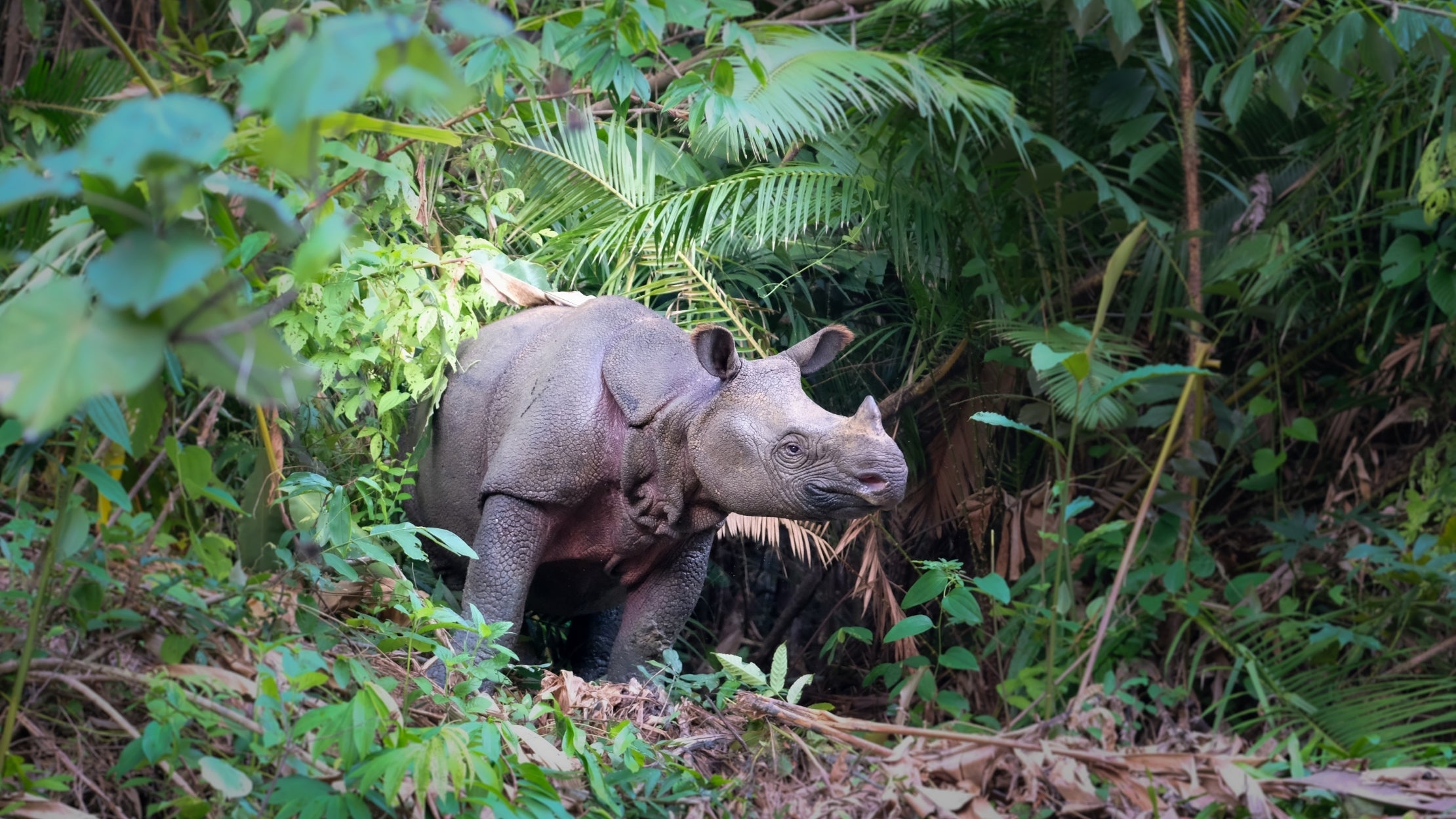
There are fewer than 100 Javan Rhinos left on Earth.
Javan Rhino Facts at a Glance
Scientific Name
Rhinoceros sondaicus
IUCN Status
Critically Endangered
Population
Less than 100 individuals
Weight
2,000 to 5,100 pounds (900 to 2,300 kg)
Height
5 to 5.5 feet at the shoulder (1.5 to 1.7 m)
Lifespan
35 to 40 years
Diet
Browser; feeds on leaves, shoots, twigs, and fallen fruit across more than 300 plant species
Habitat
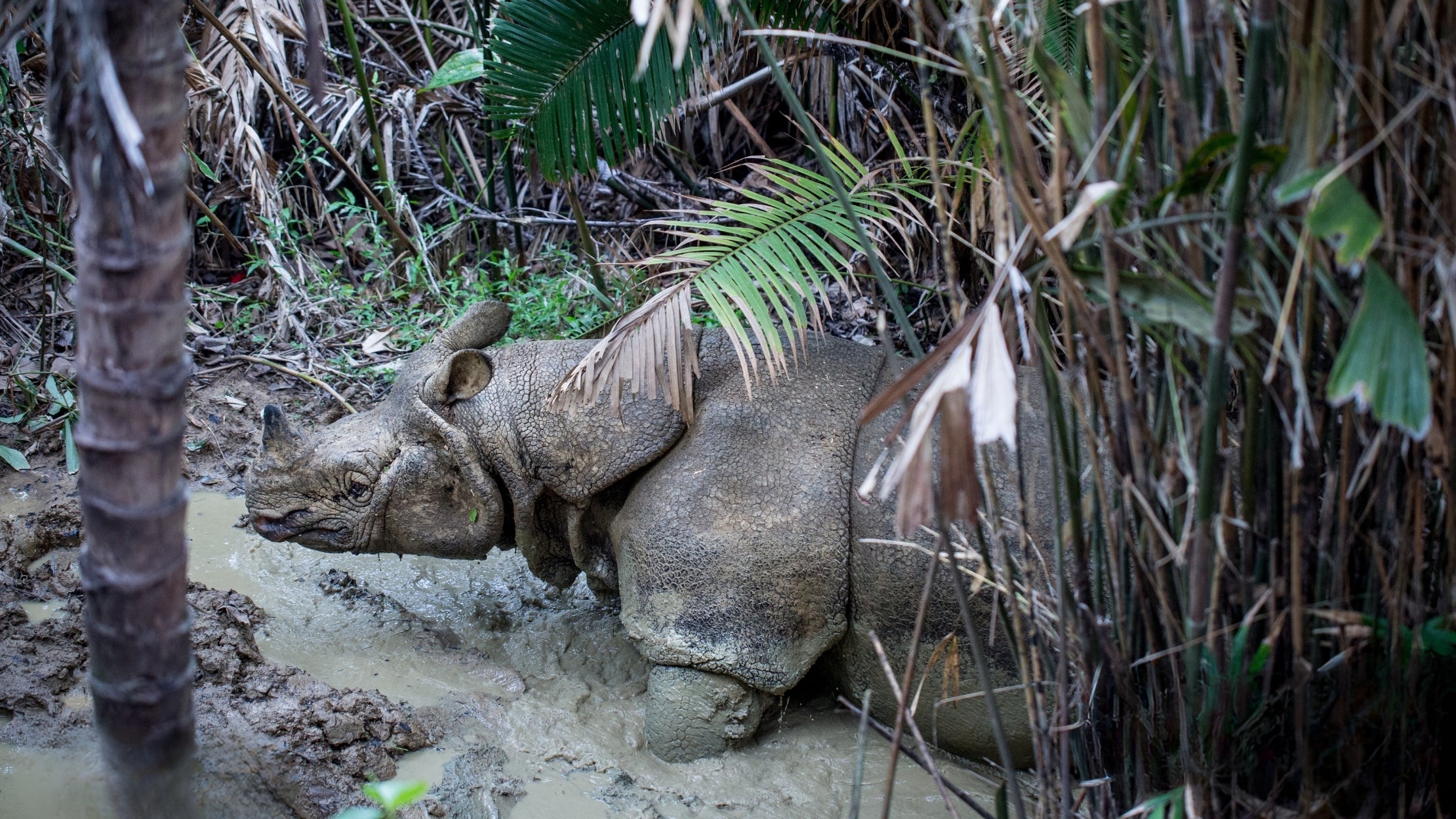
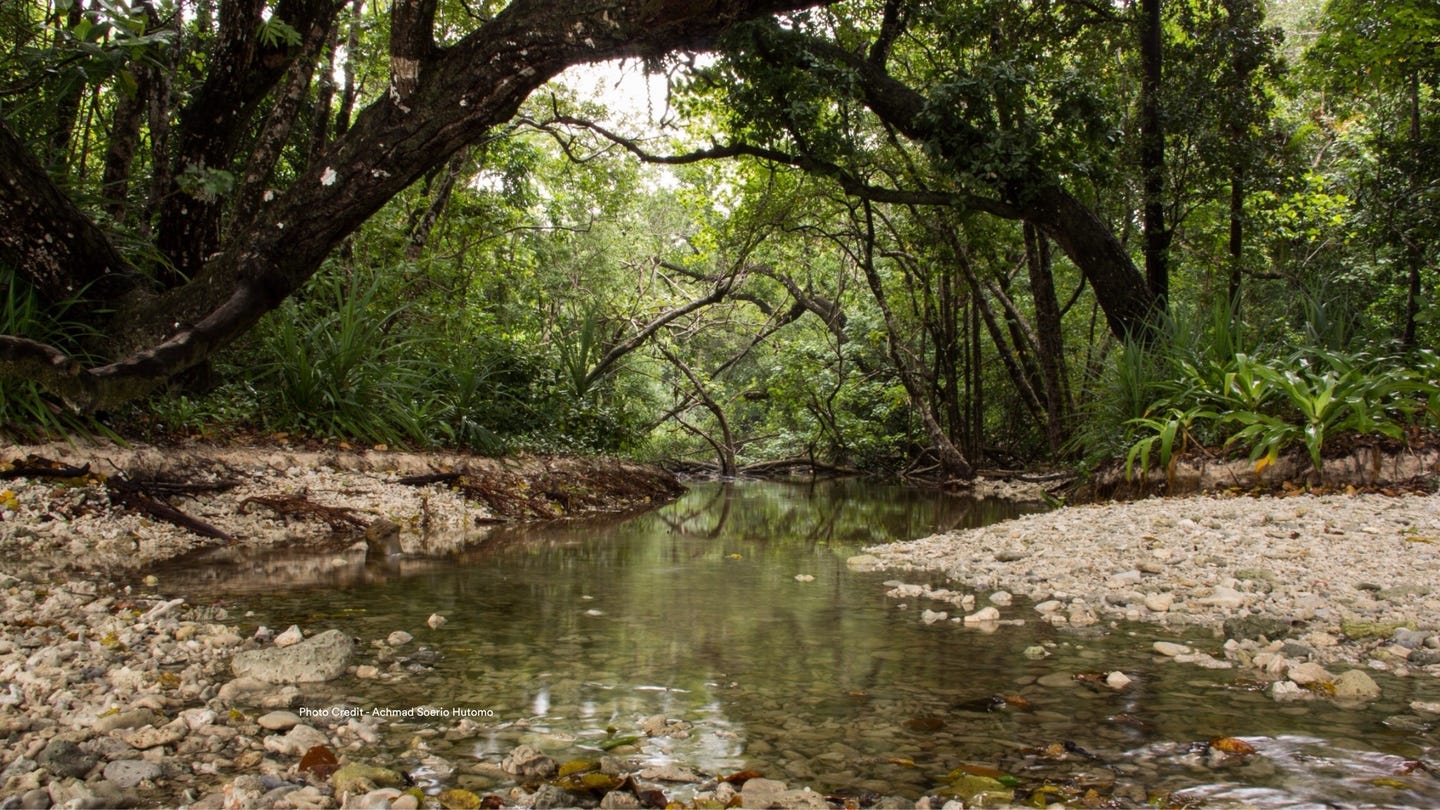
Dense tropical rainforest with access to water and mud wallows
Range
Ujung Kulon National Park, Java, Indonesia
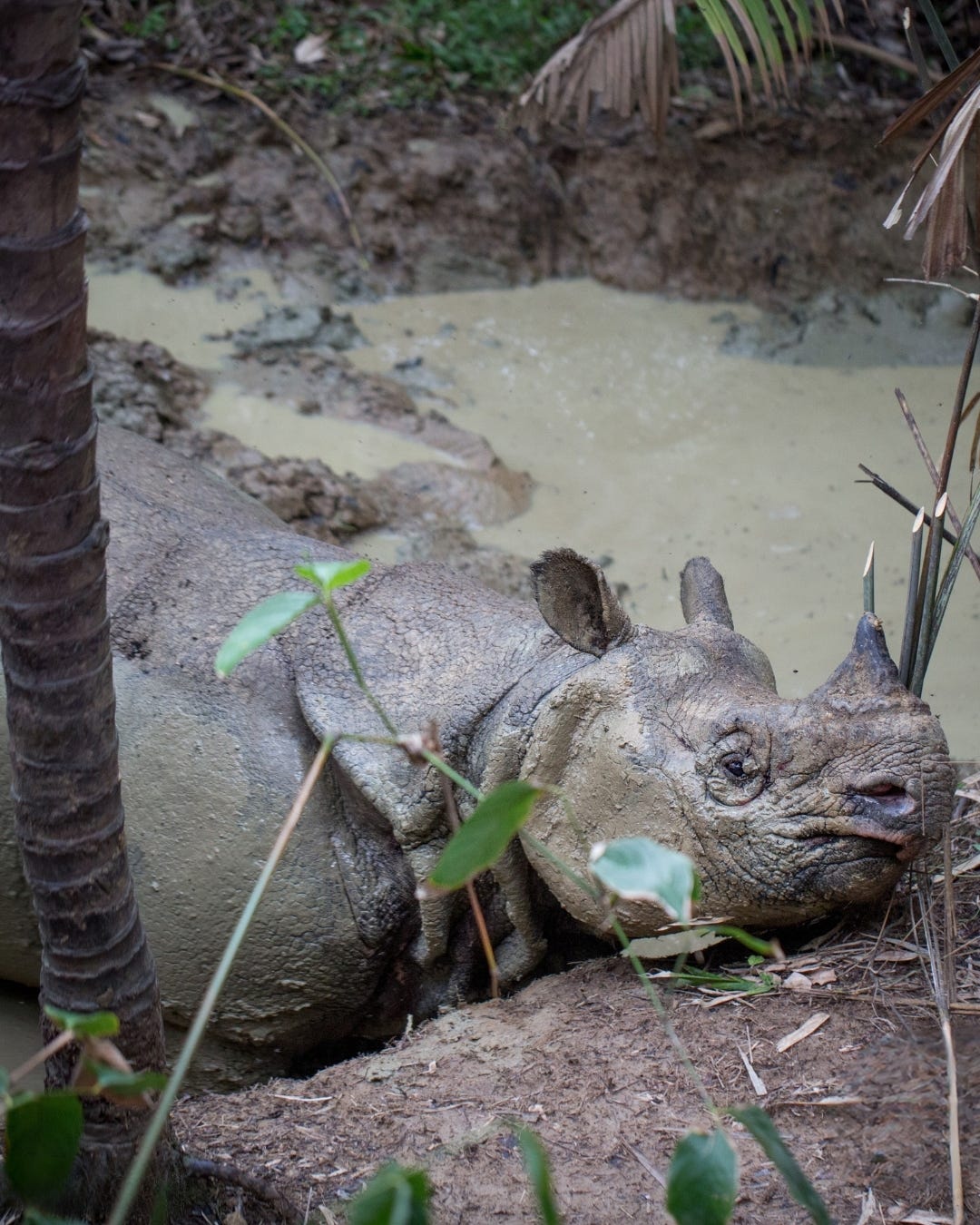
The Javan Rhino is one of the rarest large mammals on the planet.
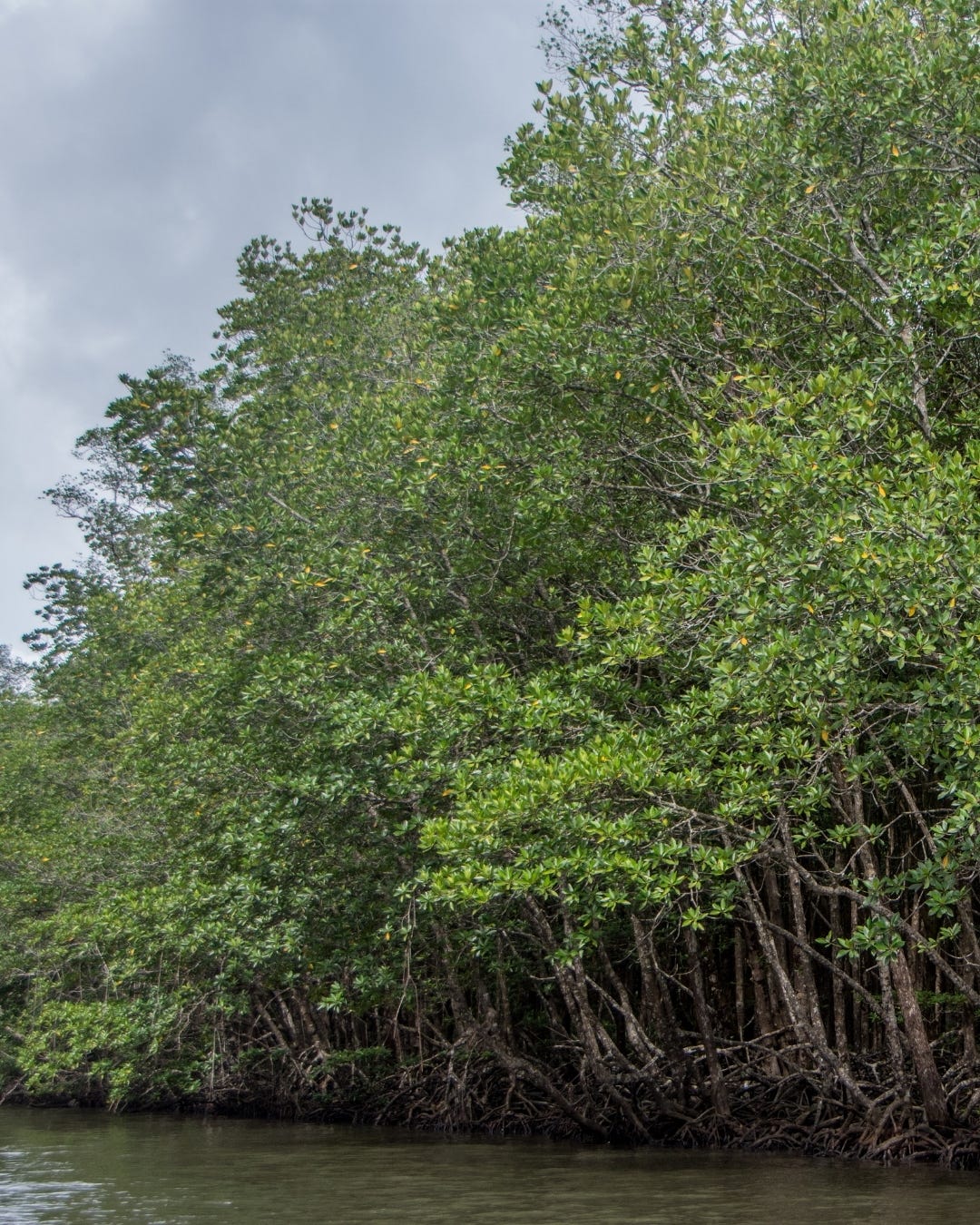
The Javan Rhino was not always confined to a single peninsula.
This small population is threatened by poaching, disease, volcanic eruptions, and tsunamis.
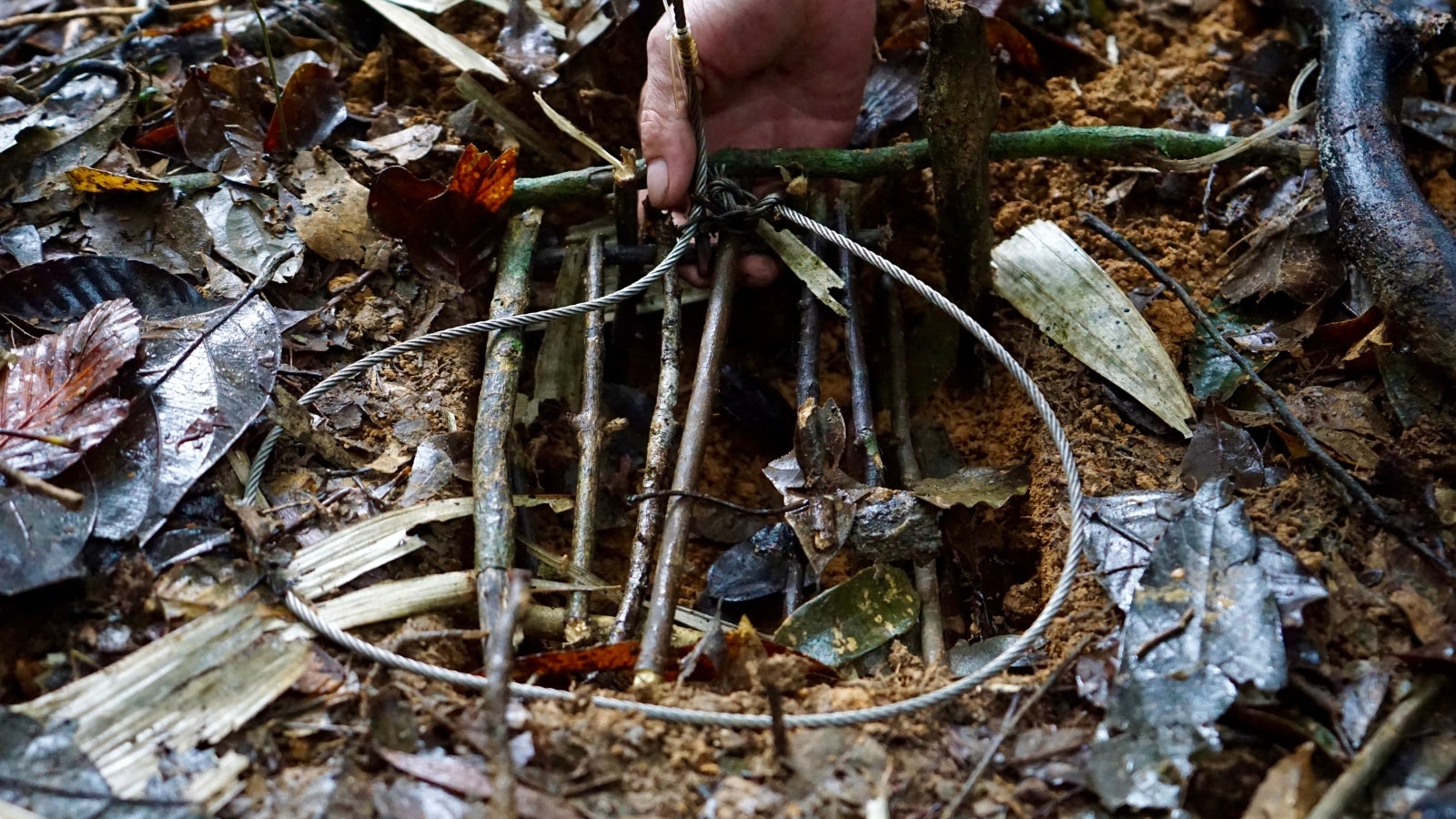
Poaching
Demand for rhino horn persists and all rhino species require constant protection from poaching.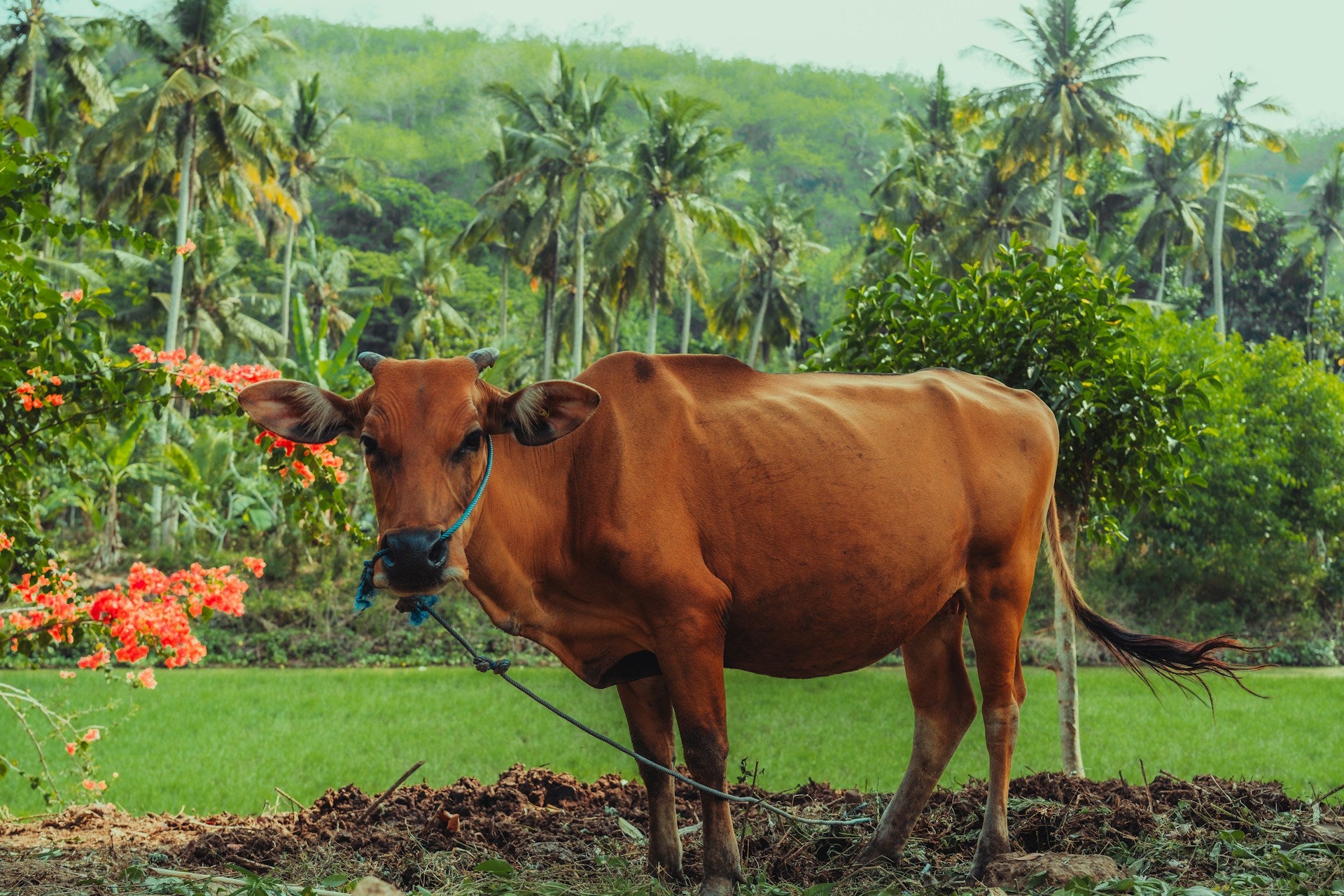
Disease
Domestic livestock near the park carry diseases that can spread to wildlife through biting flies.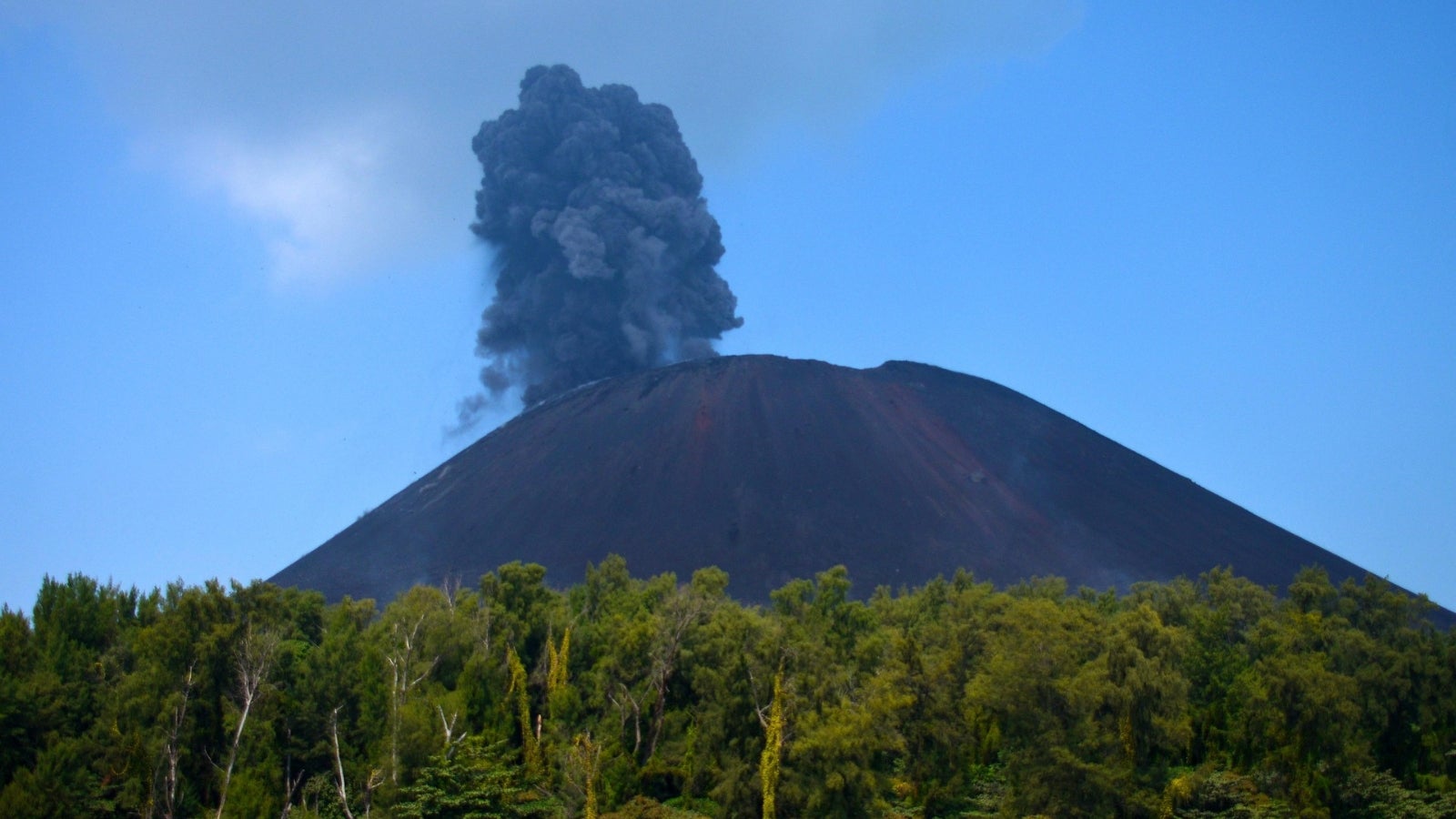
Volcanic Eruption
Anak Krakatau, an active volcano 55km from the park, poses a direct threat to the entire population.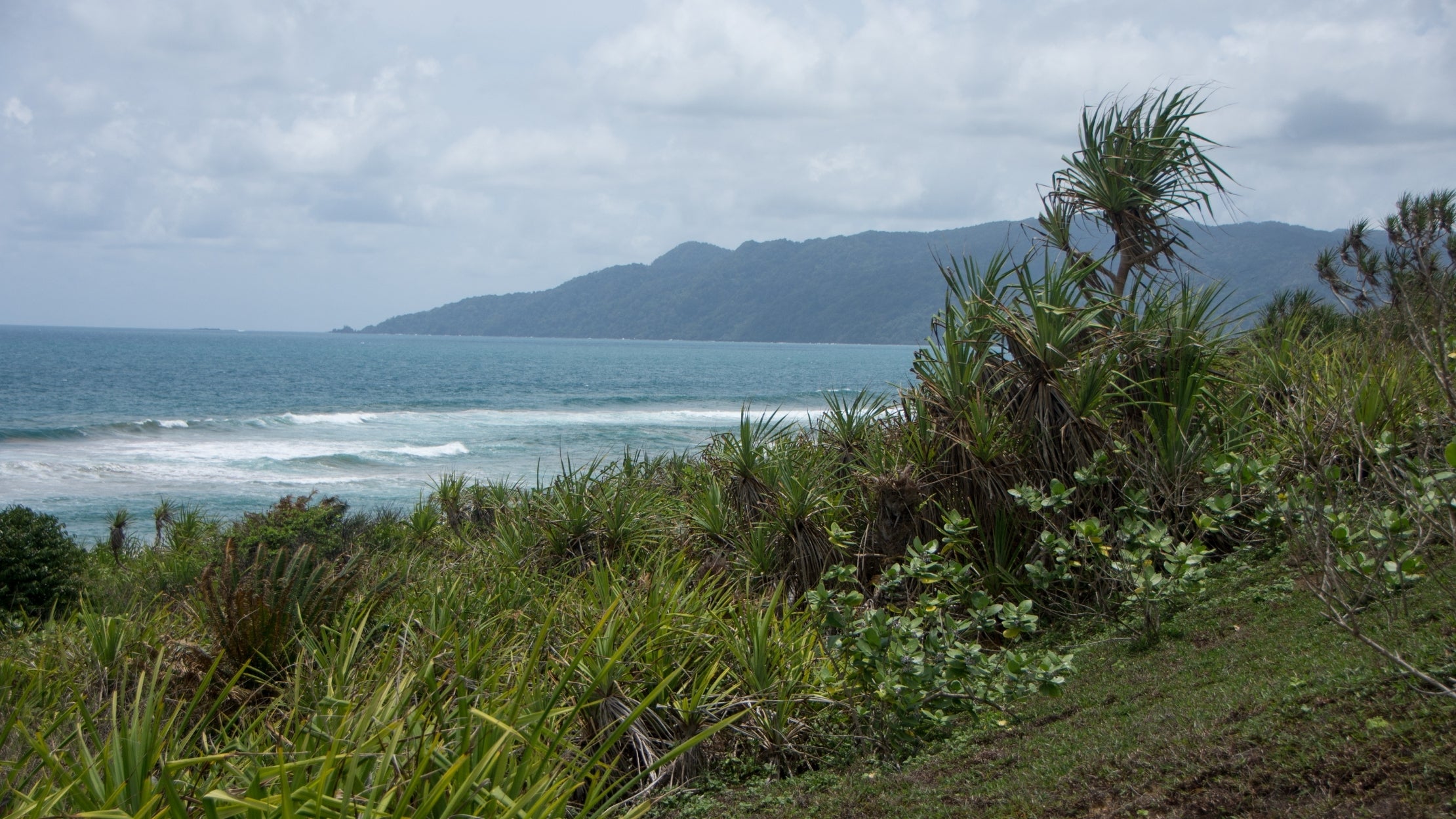
Tsunami
A major eruption or undersea earthquake could trigger a tsunami capable of overwhelming Ujung Kulon's low-lying coastal habitat.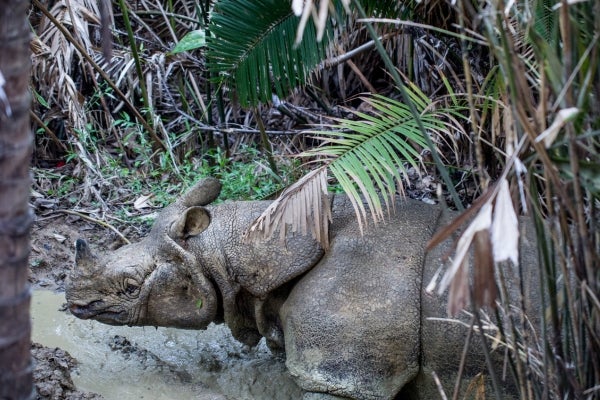
Small Population
The small number of individuals combined with the social structure, ranging patterns of the species, and the long time the population has been isolated means that the levels of inbreeding are likely very high.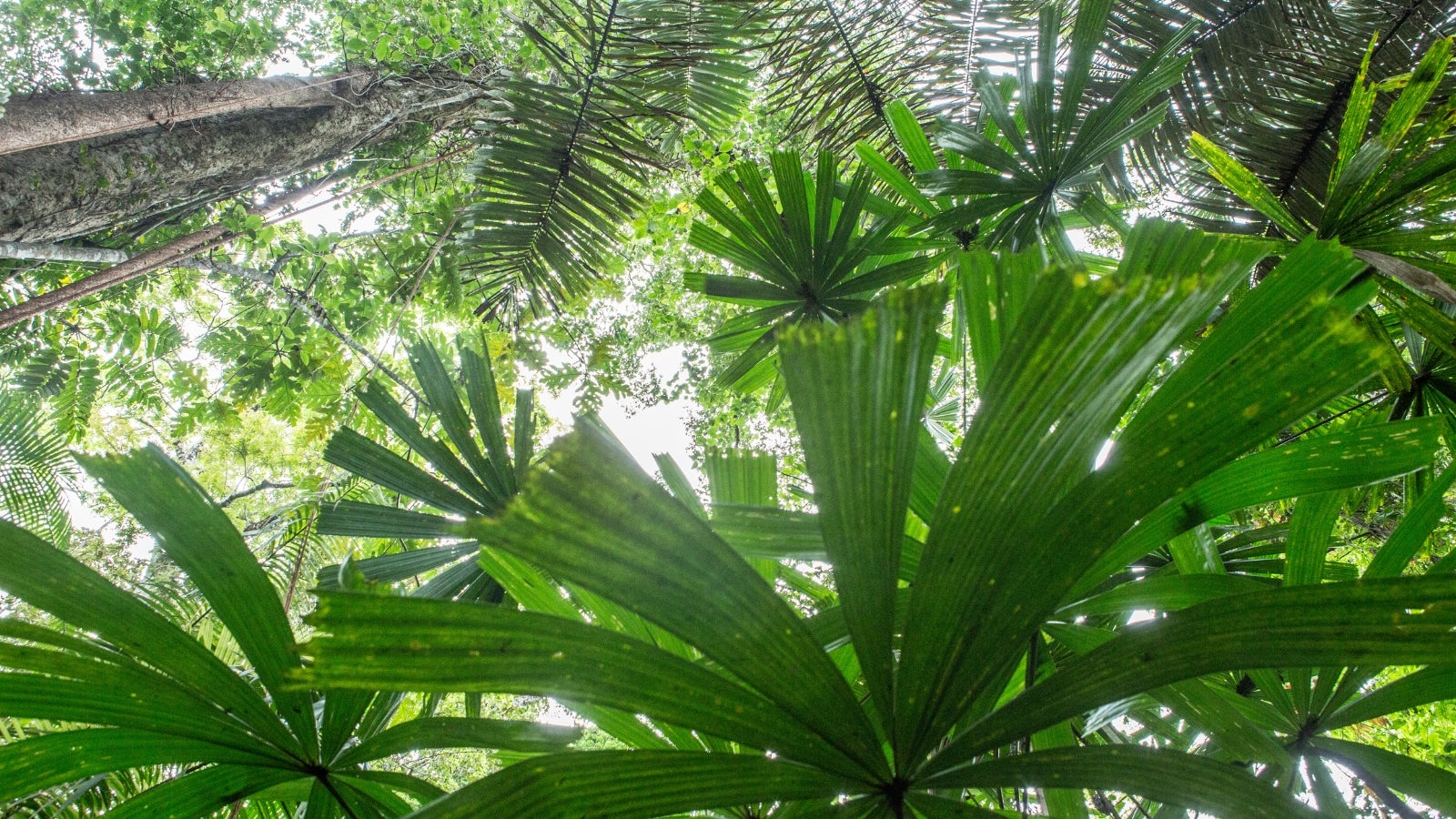
Habitat Pressure
The Arenga palm, Arenga (Arenga obtusifolia), is spreading through core rhino habitat, crowding out the plants rhinos depend on for food.
Re:wild and partners have a plan to protect this species and put it on the path to recovery.
Every part of the plan is connected. Stronger protection reduces poaching risk. Better monitoring means faster response to threats. Habitat improvement means more food, more calves, and a healthier population. And advanced science means that even the genetic diversity of animals that cannot breed naturally can be preserved and used.

Protecting every animal
Anti-poaching patrols, AI-enabled camera traps, and a digital radio system keep rangers connected and threats visible in near real time.
Monitoring the population
Every individual is tracked. Camera trap data tells us how many calves are born each year, which females are breeding, and how the population is changing.
Improving habitat
Controlling the invasive Arenga palm inside Ujung Kulon restores browse for rhinos and increases the park's capacity to support a growing population.
Advanced science
Working with Bogor Agricultural University with support from the Colossal Foundation the genetic diversity of the remaining population is being banked and we are exploring cloning and advanced reproductive technologies to grow the population.
A second population
Establishing a second Javan Rhino population at a separate site is the long-term goal. Planning is underway.
Our partners in rhino conservation.
Click or tap a logo to visit their site and learn more about their work.