Rhinos
Five rhino species survive today — and the work to keep them here is happening right now.
Support Rhino Conservation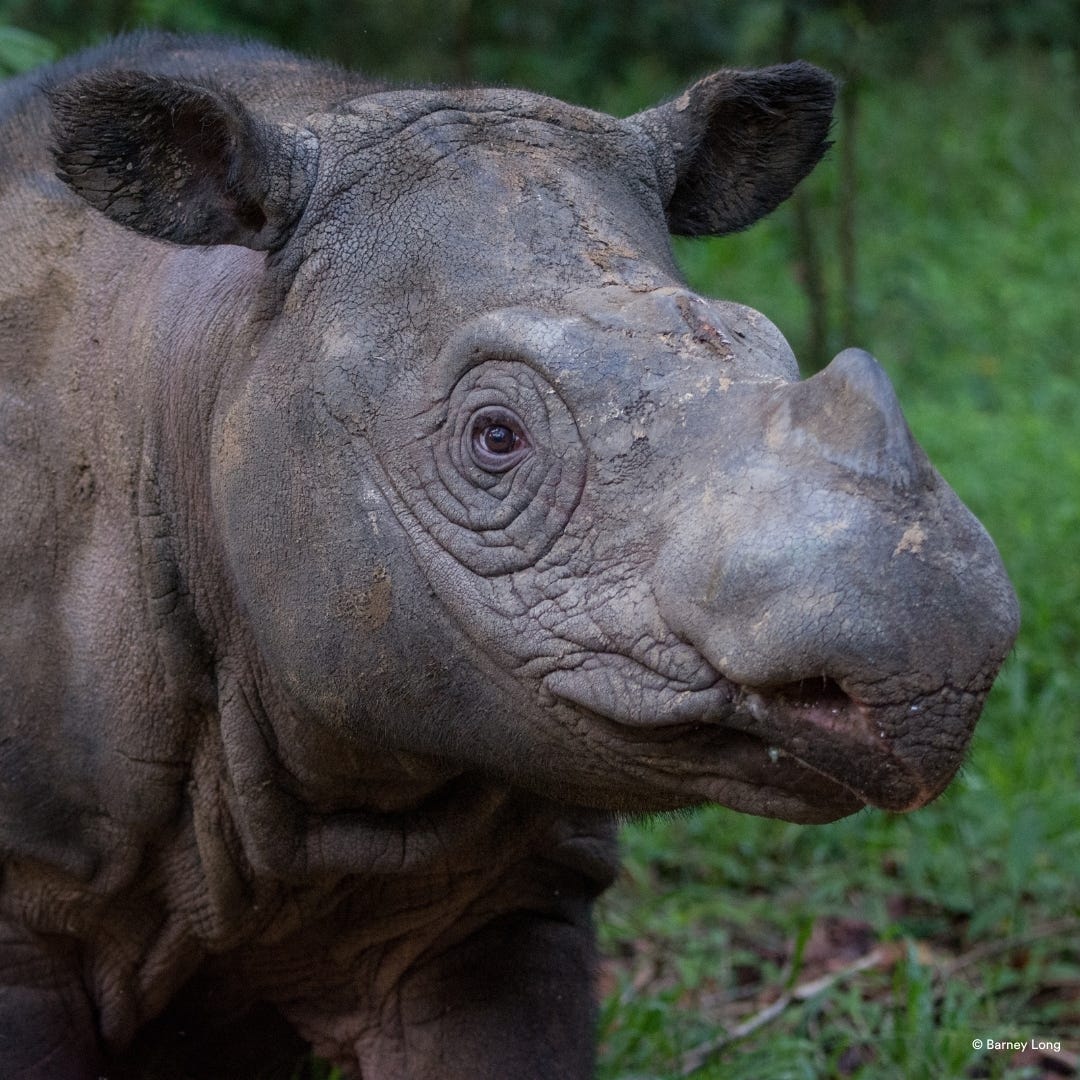
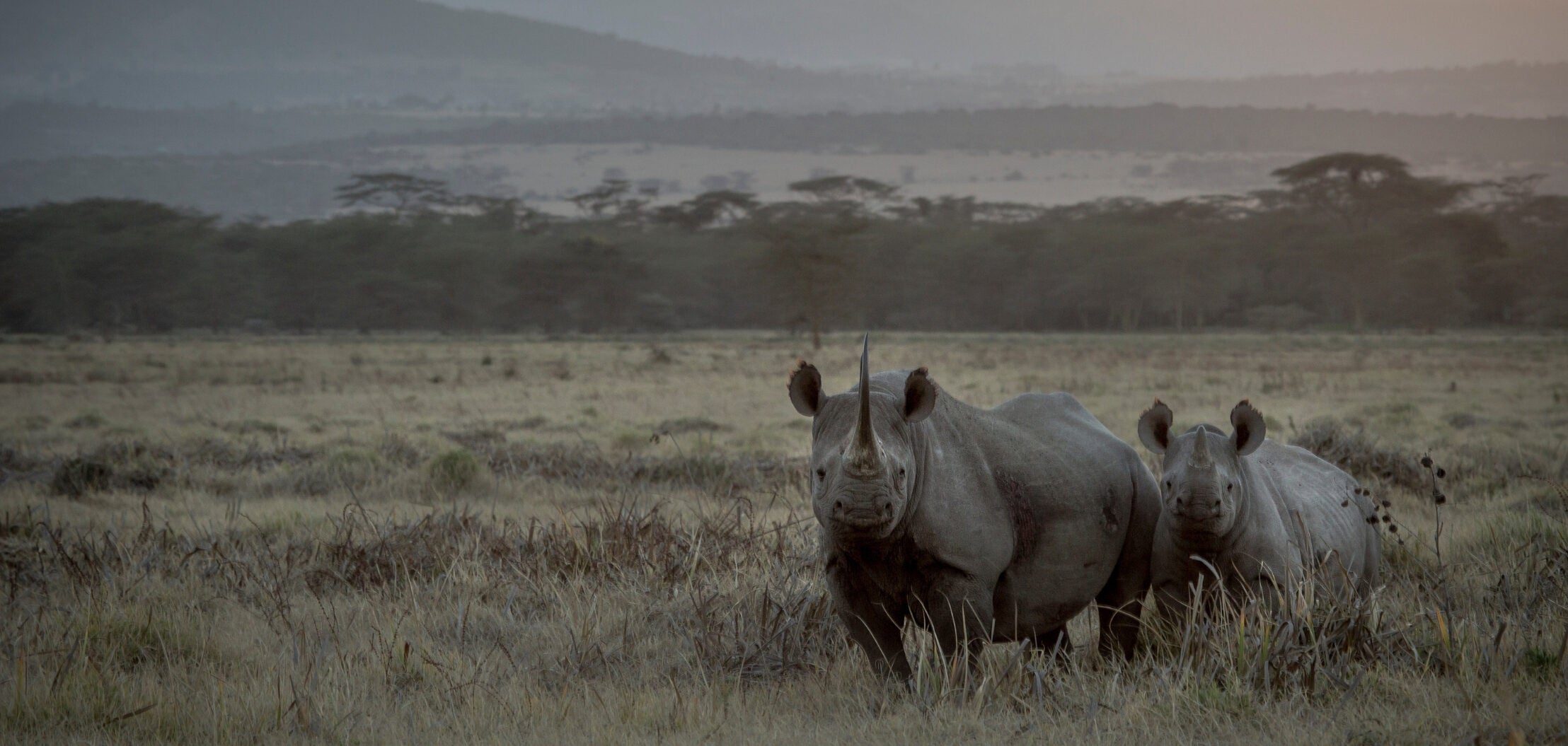
Rhinos are among the largest land mammals on Earth and among the oldest.
There are five species of rhinos in the world, split between two continents.
Hover or tap over each card to learn more about each species.
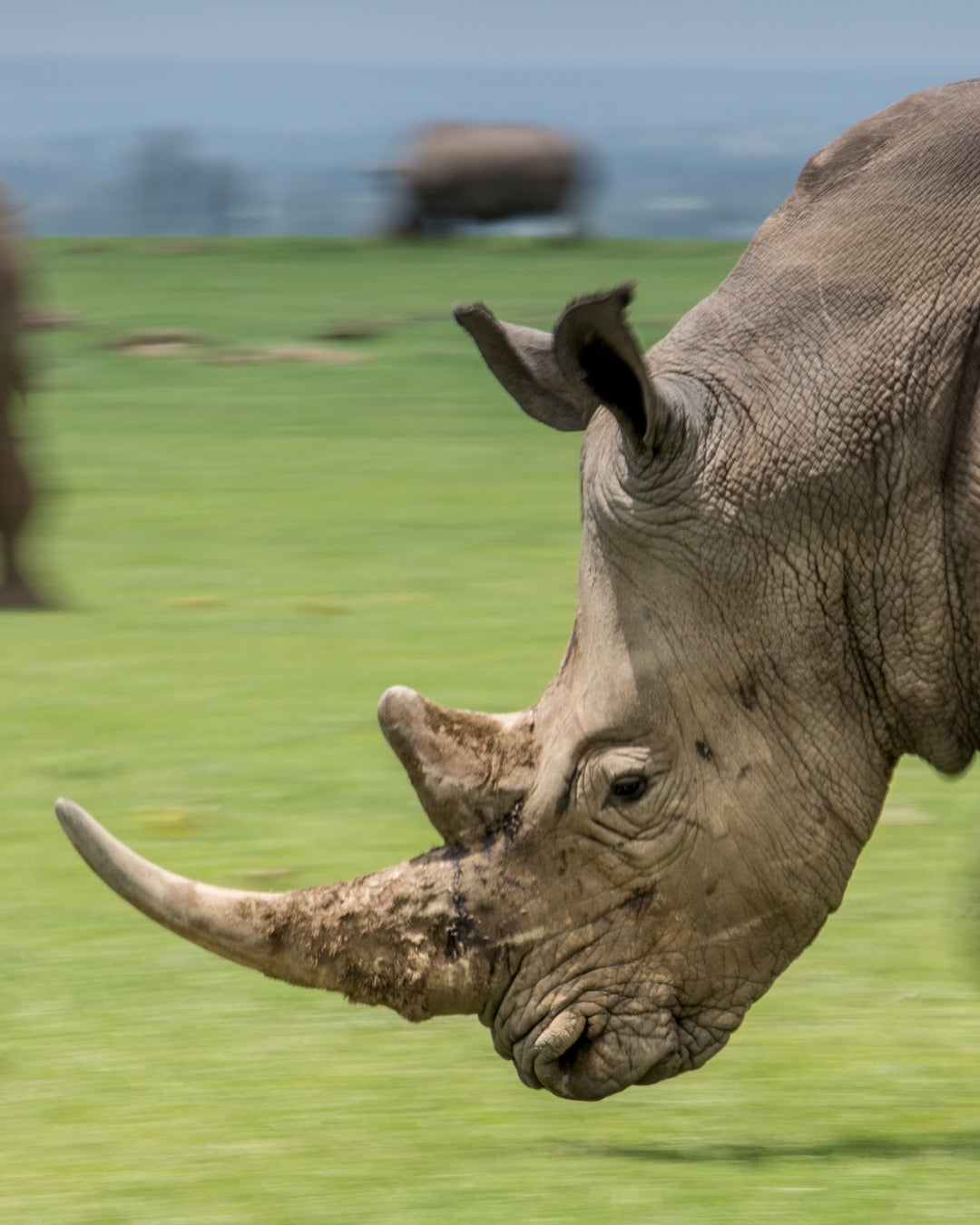
White Rhino
White Rhino
Two subspecies remain. The Southern White Rhino is the most numerous rhino, with more than 16,000 animals, following one of the great recoveries in conservation history which saw the species recover from fewer than 100 animals around 1900. The Northern White Rhino is functionally extinct; only two females remain, both in a single sanctuary in Kenya.
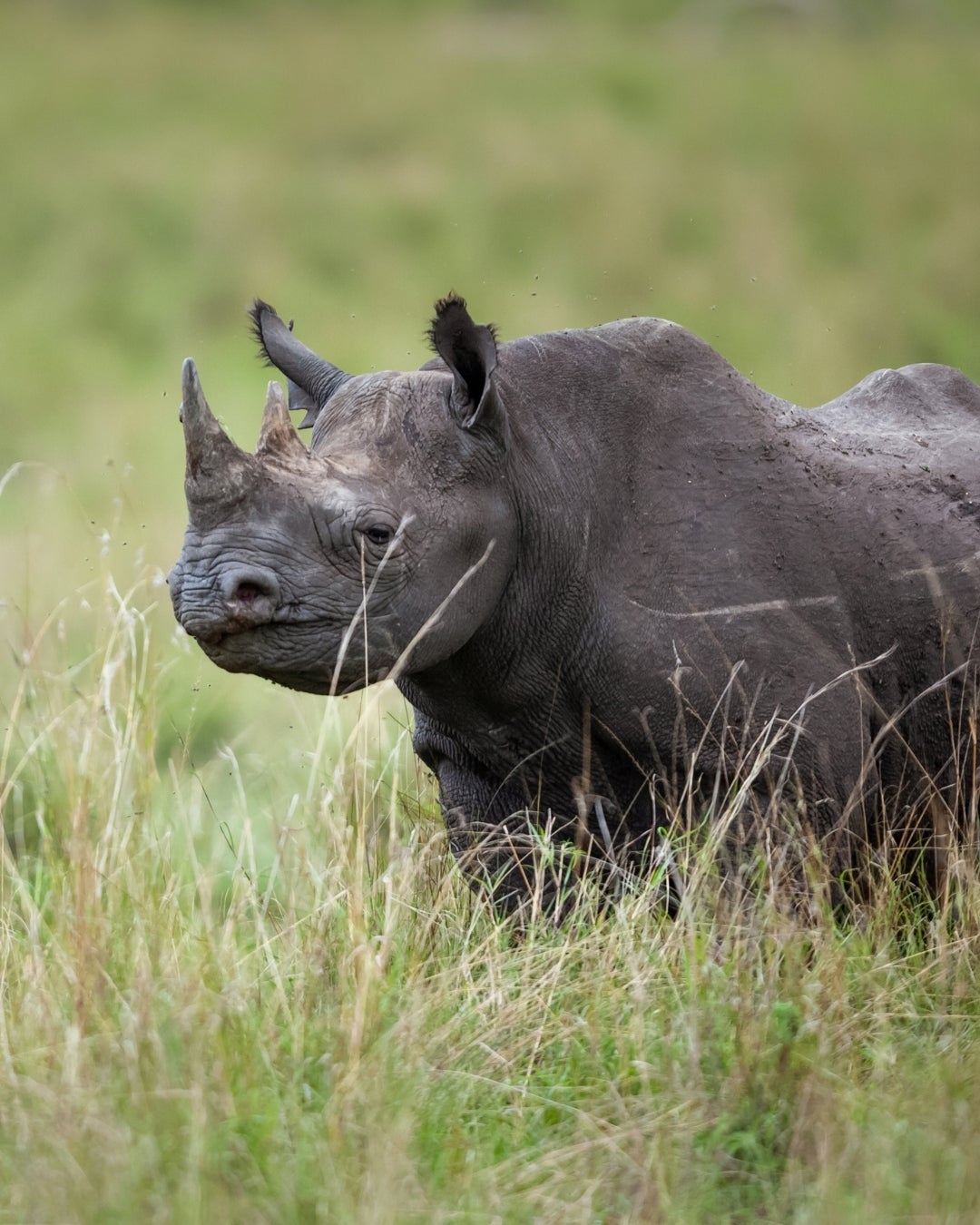
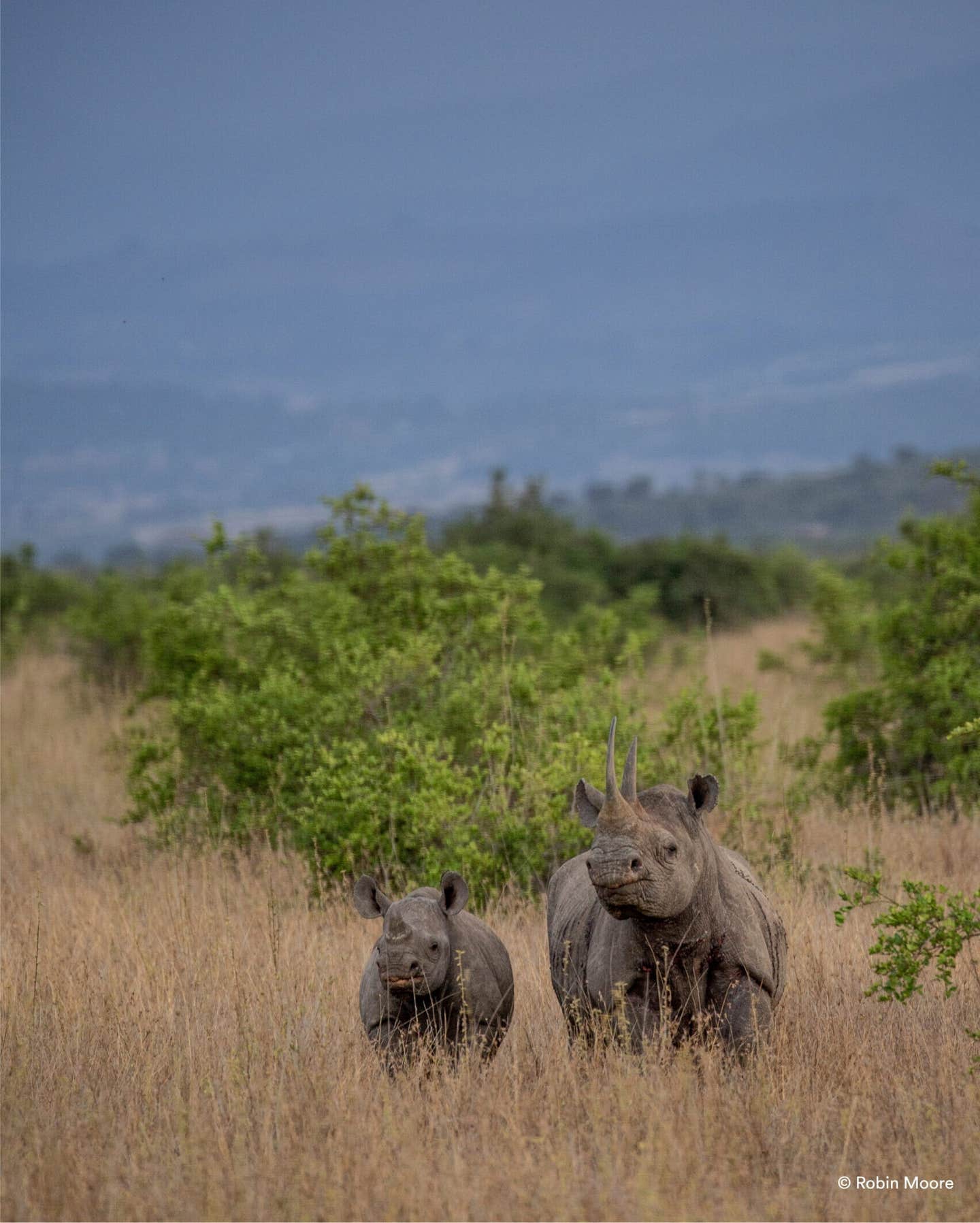
Black Rhino
Black Rhino
Critically Endangered. Now restricted to eastern and southern Africa, the Black Rhino was reduced to fewer than 2,400 individuals in 1994 and has recovered to more than 6,700 through intensive conservation.
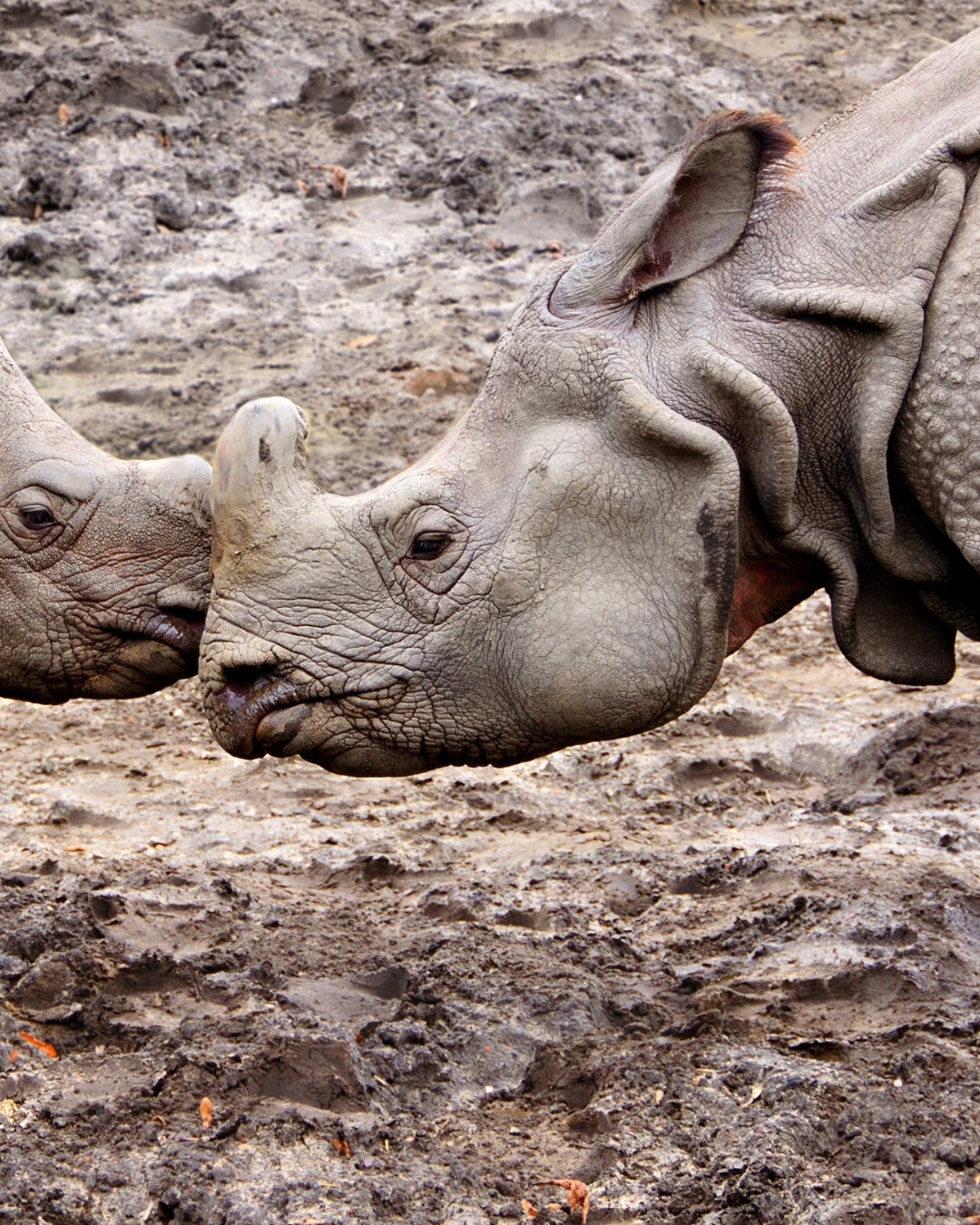
Greater One-Horned Rhino
Greater One-Horned Rhino
Vulnerable. Native to the grasslands of northern India and Nepal, the Greater One-Horned Rhino was down to around 200 animals at the turn of the twentieth century. More than 4,000 survive today.
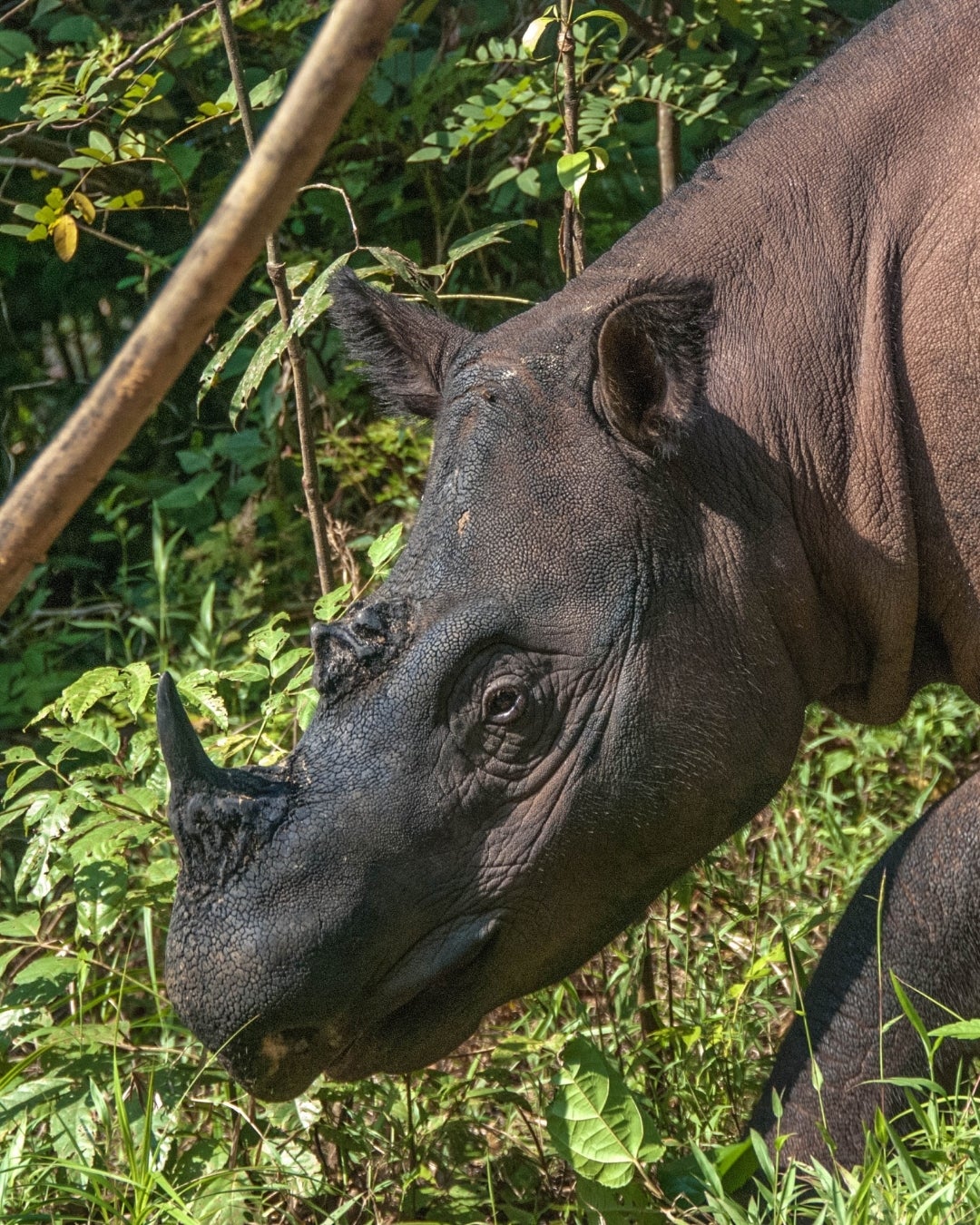
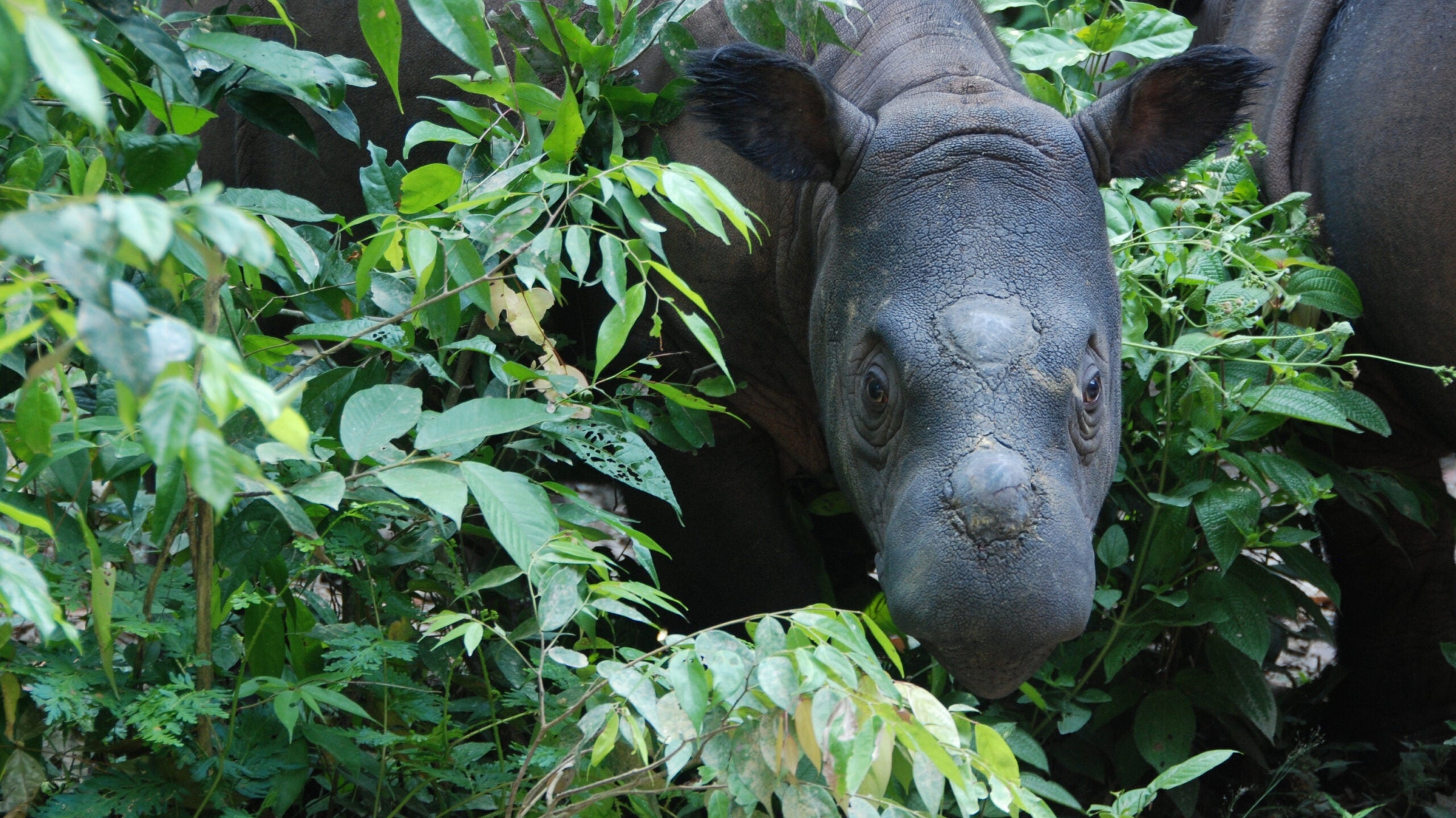
Sumatran Rhino
Sumatran Rhino
Critically Endangered. Fewer than 80 individuals survive in fragmented populations across Sumatra and Borneo, Indonesia with 11 in a conservation breeding program.
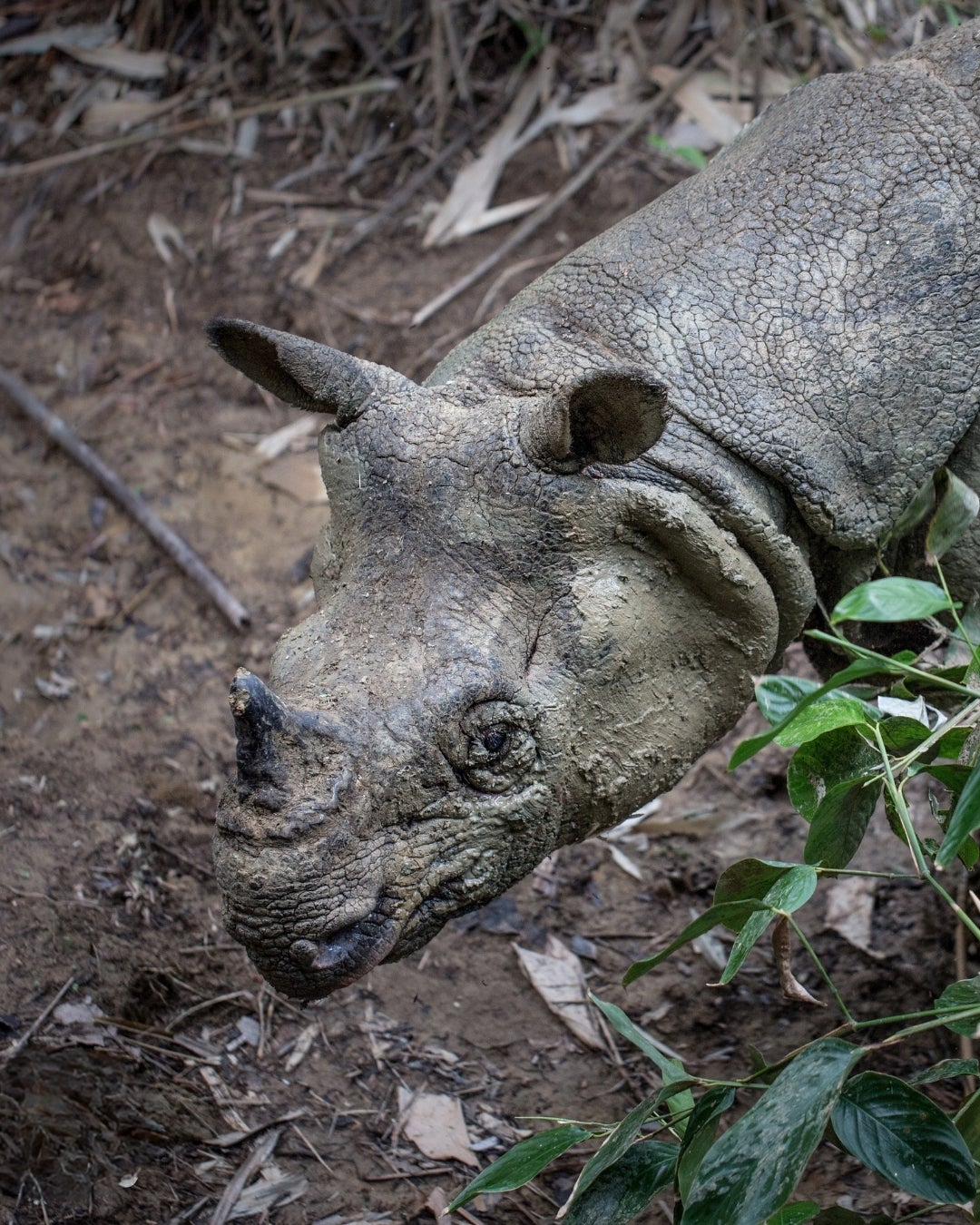
Javan Rhino
Javan Rhino
CCritically Endangered. Less than 100 individuals, all in a single national park in Indonesia close to an active volcano. One of the rarest animals on Earth.
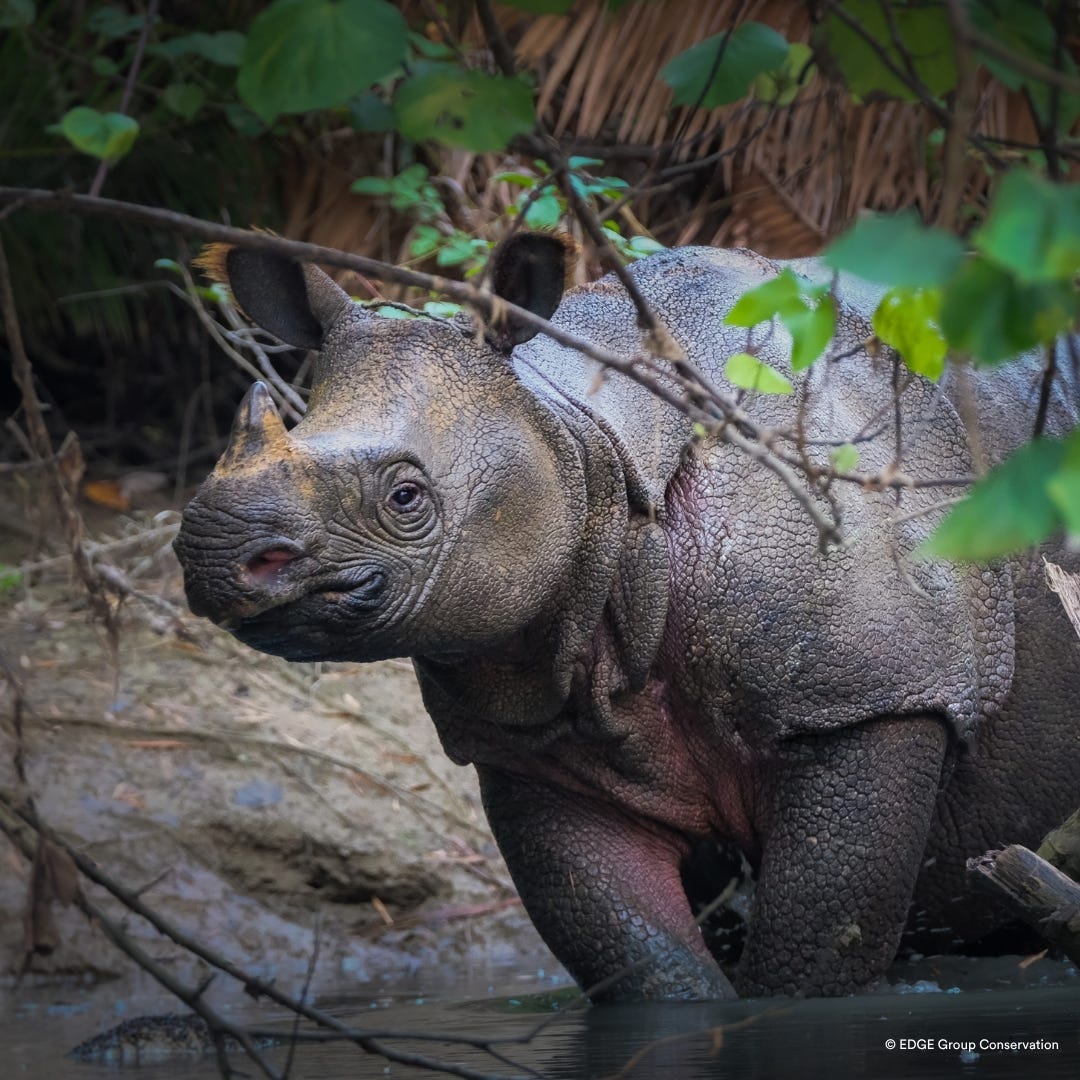
All five remaining rhino species share a similar ecological role.
Saving them follows a shared blueprint.
Re:wild's Rhino Conservation Work
Re:wild's active rhino conservation focuses on the two species facing the most urgent risk of extinction: the Javan Rhino and the Sumatran Rhino, both found only in Indonesia.
Javan Rhino
Rhinoceros sondaicus | Critically Endangered
Less than 100 individuals survive, all of them in a single national park on the western tip of Java, Indonesia. The Javan Rhino is one of the rarest large mammals on Earth. Re:wild is supporting the government of Indonesia and local conservation partners to protect and grow this last population and build toward a second population in an additional site.
Sumatran Rhino
Dicerorhinus sumatrensis | Critically Endangered
Fewer than 80 individuals survive in fragmented populations across Sumatra and Borneo. Protecting the one significant wild population is critical, but the isolation of the other populations prevent these animals from finding mates. A national conservation breeding program has delivered some success and Re:wild is supporting the government of Indonesia and local partners in Indonesia to bring isolated wild animals together to grow this breeding population and reverse the decline.
Our partners in rhino conservation.
Click or tap a logo to visit their site and learn more about their work.