
For immediate release
September 2, 2026
Download photos
Re:wild co-founders Leonardo DiCaprio and Dr. Wes Sechrest joined Federal Congresswoman Sônia Guajajara, Brazil’s first Minister for Indigenous Peoples, to honor Chief Raoni Metuktire’s Saturday, August 29, in Brazil, as part of a trip through three of the country’s most important and threatened ecosystems: the Amazon, the Pantanal, and the Cerrado.
During the trip, DiCaprio and a Re:wild delegation--which included Re:wild’s senior Brazil lead, Rodrigo Medeiros--met with President Lula da Silva and first lady Janja Lula da Silva, Minister of Culture Margareth Menezes, Minister of Environment and Climate Change João Paulo Capobianco, Minister of Indigenous Peoples Eloy Terena, and Executive Secretary of the Ministry of Culture Márcio Tavares to discuss the importance of safeguarding Brazil’s ecosystems, biodiversity, and Indigenous territories, and protecting Indigenous rights.
Since 2023--a year that marked the historic creation of Brazil’s Ministry of Indigenous Peoples, Marina Silva’s appointment as the former Minister of Environment and Climate Change, and President Lula taking office--the rate of deforestation in the Brazilian Amazon has dropped by 50% and is now at its lowest level since 2013. The progress reflects both renewed government action and the relentless work of Indigenous Peoples, local communities, conservationists, local organizations and other frontline defenders who have fought for decades to keep the Amazon standing.
Throughout the trip, DiCaprio and the Re:wild team met with many of the people driving that progress, including Indigenous leaders, conservation practitioners, scientists, philanthropists and private landowners leading local efforts to protect forest, savanna and wetland ecosystems; recover wildlife; prevent fires; and connect protected landscapes across Brazil.
The meeting with Chief Raoni was held at the headquarters of Instituto Raoni in the municipality of Peixoto de Azevedo. Kayapó Indigenous Chief Raoni is one of the world’s most powerful voices for Indigenous rights and the protection of the Amazon Rainforest, bringing global attention to the threats facing the forest and the Indigenous Peoples who have protected it for generations. Guajajara’s participation brought together two generations of internationally recognized Indigenous leadership.
Re:wild recently supported the establishment of the Chief Raoni Legacy Fund led by Instituto Raoni, which is protecting nearly 8,000 square miles (more than 2 million hectares) of Kayapó Indigenous lands in the Amazon. The fund provides a long-term and independently managed source of financing for Chief Raoni’s vision and aims to strengthen Indigenous governance and leadership, protect Kayapó territories and forests, preserve culture and knowledge, and support priorities defined by the communities themselves for future generations.
Re:wild is also supporting the production of the documentary Raoni: The Voice of the Forest, now in its final stage of production. The documentary will share Raoni’s extraordinary life story, his decades of leadership and his global campaign to protect Indigenous territories, cultures and forests for future generations.
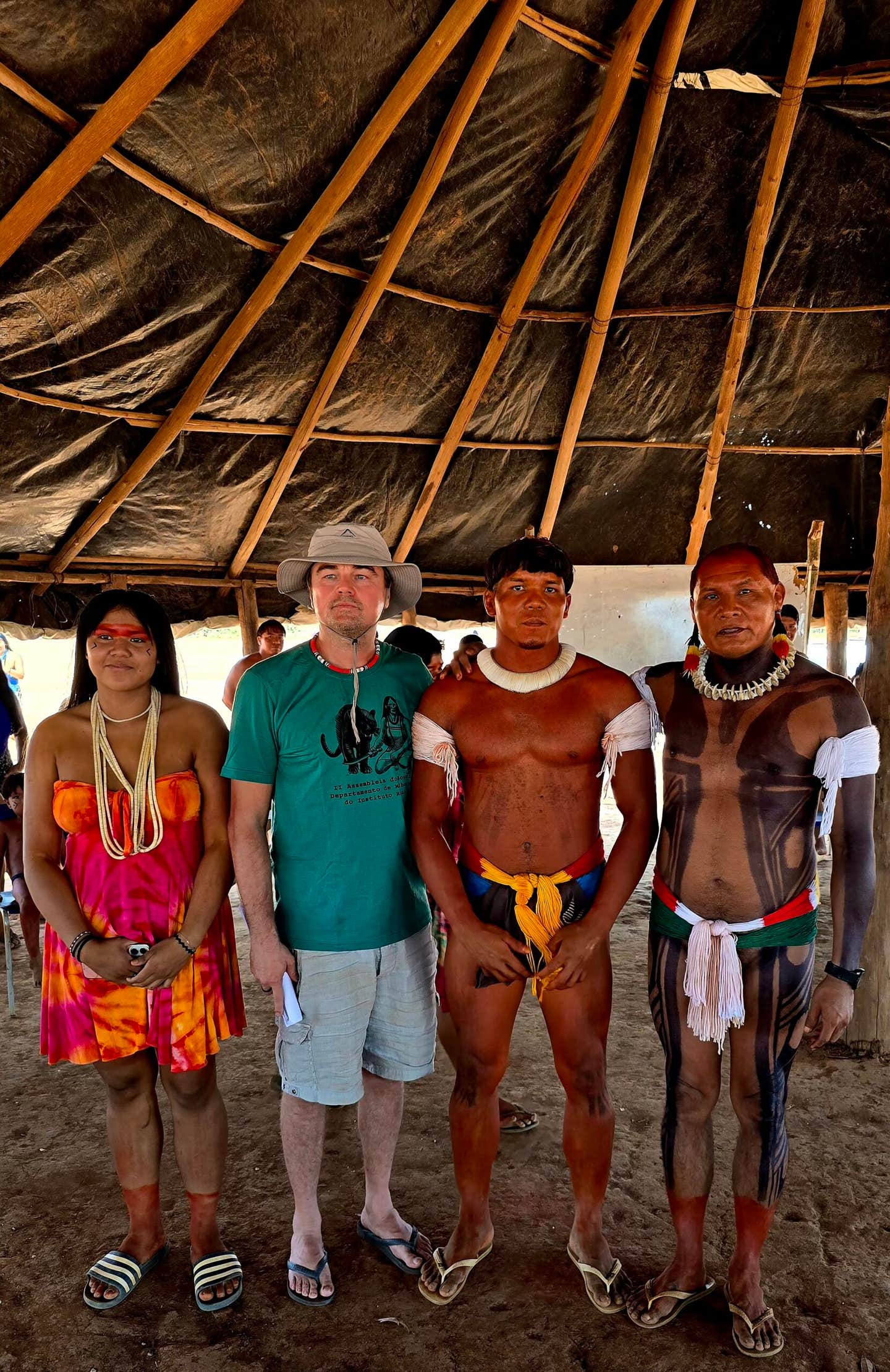
DiCaprio returned to the Yawalapiti community in the Upper Xingu, which he first visited in 2004 during his first trip to the region. Now, more than two decades later, he met with Chief Tapi Yawalapiti, Watatakalu Yawalapiti and other community members to learn about efforts to protect Indigenous lands, strengthen cultural and linguistic continuity, prevent fires and develop sustainable, community-led economic alternatives.
The journey also took the delegation to the southern Amazon, where the group visited Instituto Libio at Rio Azul, where Re:wild and Brazilian partners are supporting the Southern Amazon Shield, an ambitious effort to safeguard more than 14 million acres (5.8 million hectares) of forests, rivers and other natural ecosystems along one of the Amazon’s most active deforestation frontiers. The initiative aims to connect public protected areas, Indigenous territories and private reserves while strengthening fire prevention, territorial monitoring and protection of critical watersheds.
In the Pantanal, the world’s largest wetland, the group visited Caiman, a lodge and a private reserve with several conservation and research projects, Fazenda Santa Tereza, a conservation property that is part of the Alto Pantanal Corridor, and partners advancing jaguar and wildlife recovery and the protection of public and private lands led by Onçafari. Re:wild and partners recently supported efforts that contributed to the expansion of two major federal conservation units by more than 257,000 acres (104,000 hectares) and are working to protect approximately 326,180 acres (132,000 hectares) in the Taquari Wetlands through private reserves and a proposed new state park.
The trip concluded in the Cerrado, the world’s most biodiverse tropical savanna, where the group visited Fazenda Trijunção, a pioneering conservation landscape engaging in rewilding, wildlife monitoring, and tourism. The property protects approximately 74,132 acres (30,000 hectares) of native vegetation along a rapidly expanding agricultural frontier and contributes to a larger ecological corridor that supports maned wolves, giant anteaters, South American tapirs, jaguars and other wildlife.
The trip comes just days before Brazil’s Amazon Day Sept. 5, which marks the anniversary of the establishment of the Amazon Province in 1850.
The Brazilian Amazon makes up about 60% of the Amazon Rainforest, which remains under intense pressure from extractive industry and development. Between 1985 and 2021, animal agriculture--including cattle pasture and crops grown for animal feed--drove an estimated 95% of deforestation in the Brazilian Amazon. Scientists have warned that if 20-25% of the Amazon is destroyed, the rainforest could reach a tipping point--a threshold beyond which it can no longer sustain itself.
Fires started by people are an increasing part of the threat. In 2023 and 2024, Re:wild deployed approximately $8.5 million in fire-related investments in Brazil, including $5 million from the Bezos Earth Fund. Those investments helped equip 979 firefighters across eight states and supported 55 Indigenous associations and more than 1,000 brigade members. The work helped prevent an estimated 187,000 hectares from burning across Indigenous territories and another 21,387 hectares within federal and state protected areas, while strengthening fire monitoring and vigilance across tens of millions of hectares.
Re:wild collaborates with more than 50 local partners in Brazil, including the Kayapó and the Yawalapiti through Instituto Raoni and Associação Terra Indígena do Xingu (ATIX), investing in partnerships that protect and restore some of the country’s most important ecosystems, including the Amazon Rainforest. This includes:
- supporting the creation, expansion and effective management of protected areas;
- strengthening Indigenous territories and Indigenous-led organizations;
- improving forest and biodiversity monitoring;
- reducing deforestation and other illegal activities; preventing and responding to wildfires;
- restoring wildlife populations and ecological processes;
- mobilizing long-term philanthropic support for conservation led by local organizations and communities;
- finding economic alternatives to cattle ranching in the Amazon that are environmentally sustainable.
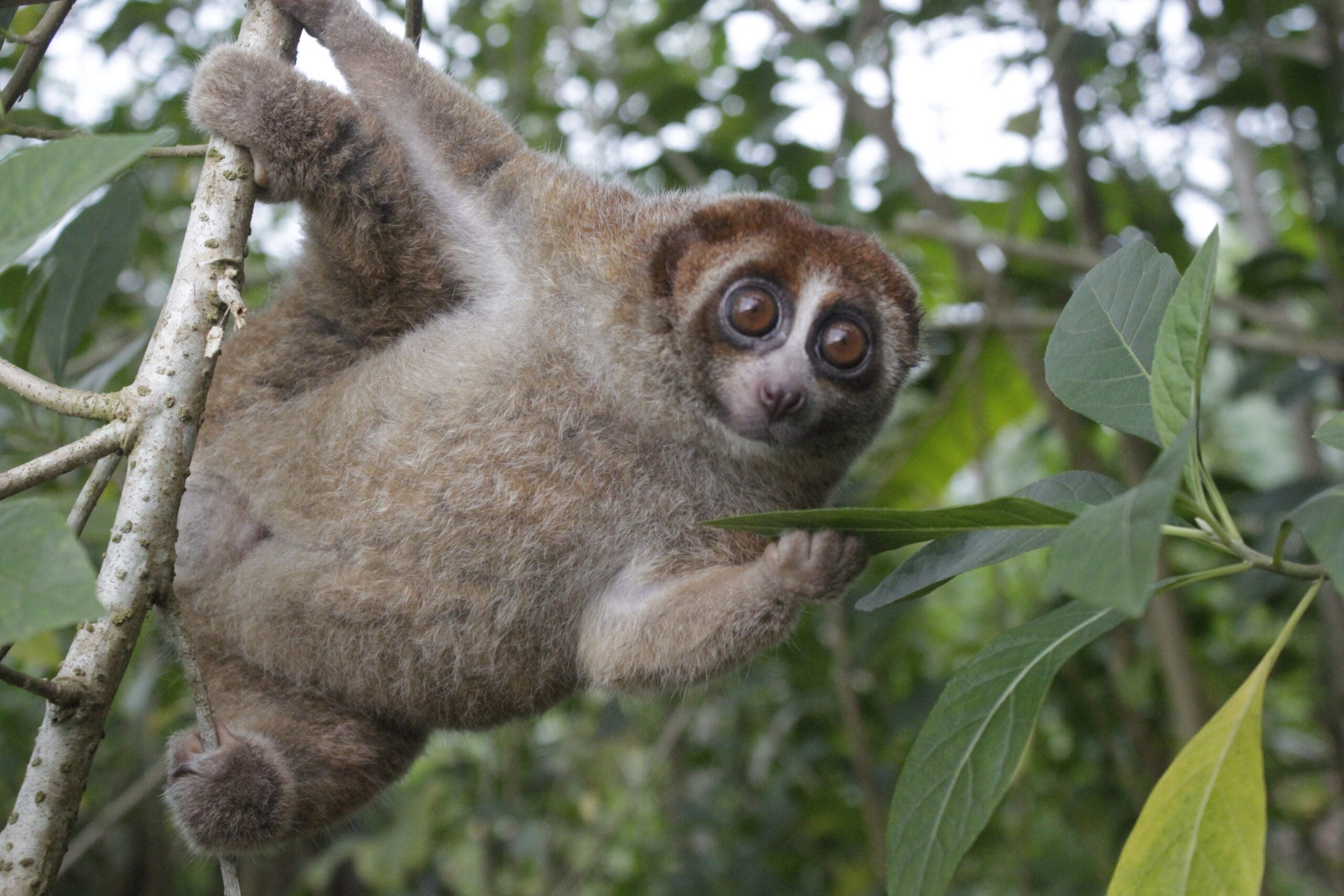
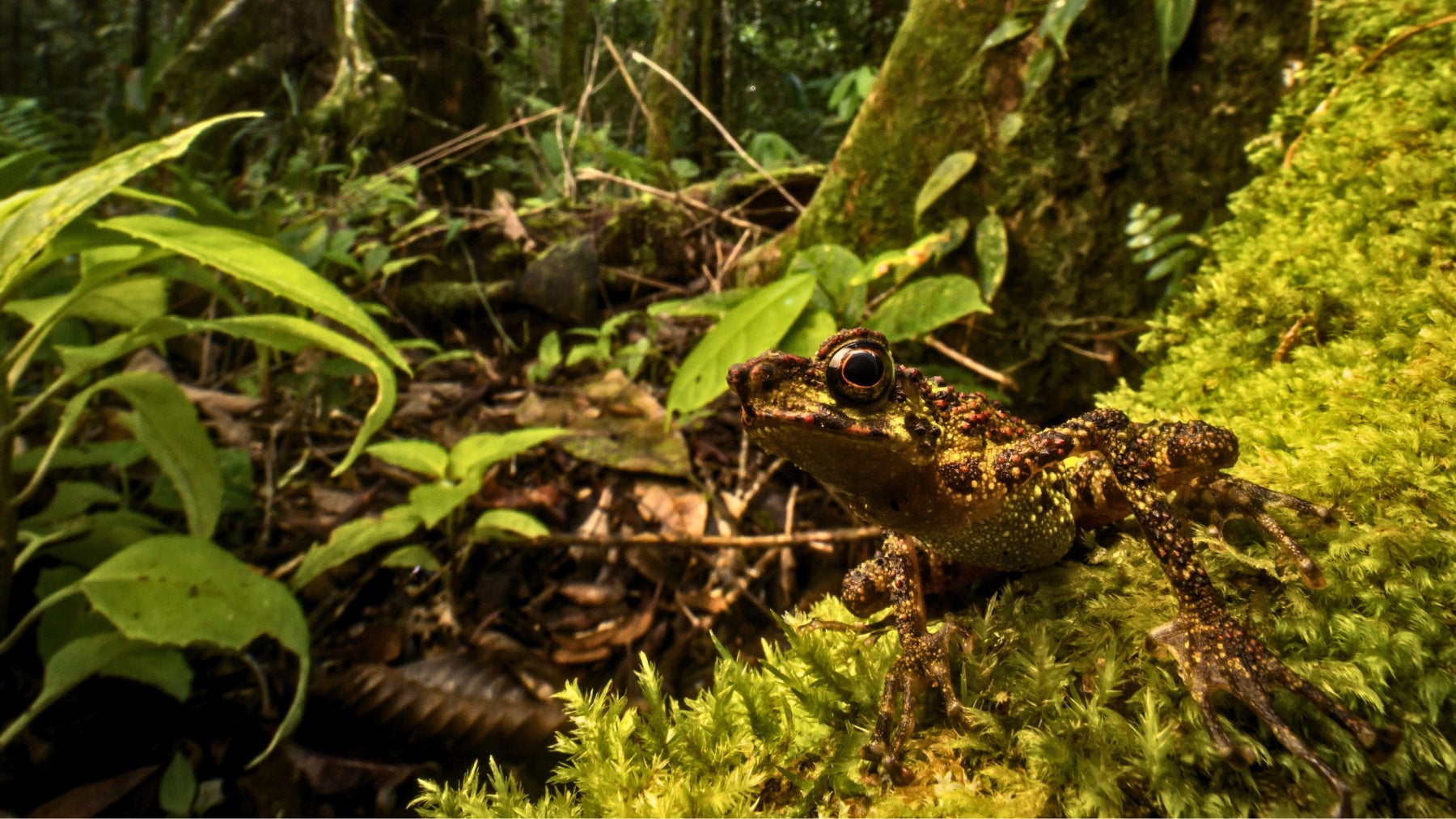
Brazil is also a priority country for the Phoenix Species Project, a project recently launched by Re:wild and the Bezos Earth Fund, with support from Leonardo DiCaprio, Age of Union and the Todd Graves Family Foundation. Beginning with a $200 million commitment, the initiative provides support to recover some of the world’s most threatened species. Five of the project’s 100 species are found exclusively in Brazil: the Blue-eyed Ground-dove (Columbina cyanopis), Cherry-throated Tanager (Nemosia rourei), Northern Muriqui (Brachyteles hypoxanthus), Casque-headed Painted Treefrog (Nyctimantis pomba) and Restinga Toadlet (Melanophryniscus setiba).
# # #
Photo: Leonardo DiCaprio with Chief Cacique Tapi Yawalapiti and members of his family. (Photo by Rodrigo Medeiros, Re:wild)
Download photos
Re:wild
Re:wild protects and restores the wild. We have a singular and powerful focus: the wild as the most effective solution to the interconnected climate, biodiversity and human wellbeing crises. Founded by a group of renowned conservation scientists together with Leonardo DiCaprio, Re:wild is a force multiplier that brings together Indigenous peoples, local communities, influential leaders, nongovernmental organizations, governments, companies and the public to protect and rewild at the scale and speed we need. Learn more at rewild.org.
Contact
Lindsay Renick Mayer
Re:wild
lrenickmayer@rewild.org
512-686-6225

Lindsay Renick Mayer
Director of Communications and Impact Campaigns
Lindsay is the Director of Communications and Impact Campaigns for Re:wild and has a particular interest in leveraging communications to inspire conservation action. Lindsay is passionate about species-based conservation and finding compelling ways to tell stories that demonstrate the value of all of the planet’s critters, big and microscopic.