forests for life
The partnership that protects more than 2 billion acres of forests.
Protecting intact forests around the world
The Forests for Life Partnership, launched in 2019, aims to halt and reverse forest degradation across 2.47 billion acres of the world’s most intact forests. Forests for Life focuses on protecting the world’s most important intact forests in Amazonia, the Congo Forests of Central Africa, New Guinea, the northern boreal and other surviving large forest blocks representing the world’s natural life support system.
Forests are one of the greatest solutions to the climate and extinction crises. They function as a massive carbon sink for Earth and are key to maintaining regional rainfall patterns. The world’s forests are home to 80% of all land-based wildlife species. Despite being one of the most effective nature-based solutions to climate change and the extinction crisis, forests are undervalued and largely unprotected.

Forests for Life has committed more than $50 million to protecting and restoring forests by 2025, with a goal to mobilize an additional $200 million from individuals, foundations, corporations, and governments through the launch of a dedicated Forests for Life Action Fund.
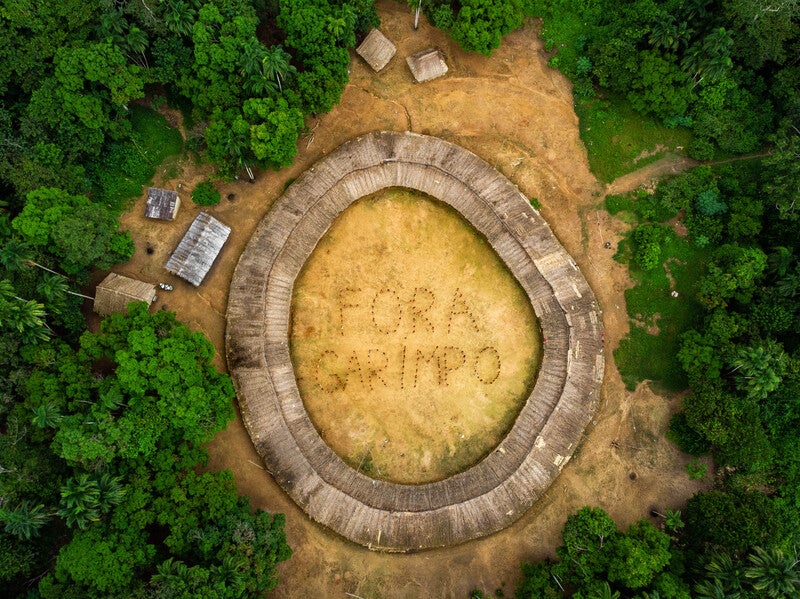
Less than 25% of the forests on the planet are intact—meaning they have not been damaged or destroyed by roads, mining, logging, oil extraction or industrial farming. The majority of intact forests are home to and protected by Indigenous peoples who harvest forest resources in ways that preserve their biological diversity and safeguard the clean water, clean air and food they provide. It’s estimated that Indigneous peoples may hold up to 65% of the global forested land area. Any strategy to protect the world’s forests must include Indigenous peoples, respect and recognize their rights, which are increasingly threatened.
Intact forests remove about a quarter of the carbon humans release into the atmosphere every year, yet they are being destroyed due to humanity’s overconsumption of their resources. They are being damaged at twice the rate of forests overall. Between 2000 and 2016, 9% of the planet’s intact forests were destroyed. Protecting these forests would also help meet global climate, biodiversity and sustainable development targets.

One of Forests for Life’s signature initiatives is Five Great Forests, which is protecting and restoring the largest blocks of forest in Mesoamerica. Five Great Forests is working to rewild 1.2 million acres and protect 25 million acres of forest spanning from Mexico to Colombia.
Top photo: A forest in Bolivia (Robin Moore/Re:wild)
Partners