Global Wildlife Conservation focuses on the prevention of wildlife crime – stopping poachers before a crime is even committed – rather than primarily on punishing offenders. We're engaged in wildlife crime prevention around the globe, where we help our local partners develop comprehensive approaches that are highly tailored for each site's specific needs and requirements.
There's not a magic bullet to end wildlife crime, so we must maximize every available resource. A holistic approach that creates region-specific solutions is our best path towards achieving zero poaching and protecting biodiversity.
Six Pillars Of The Zero Poaching Toolkit
Assessment
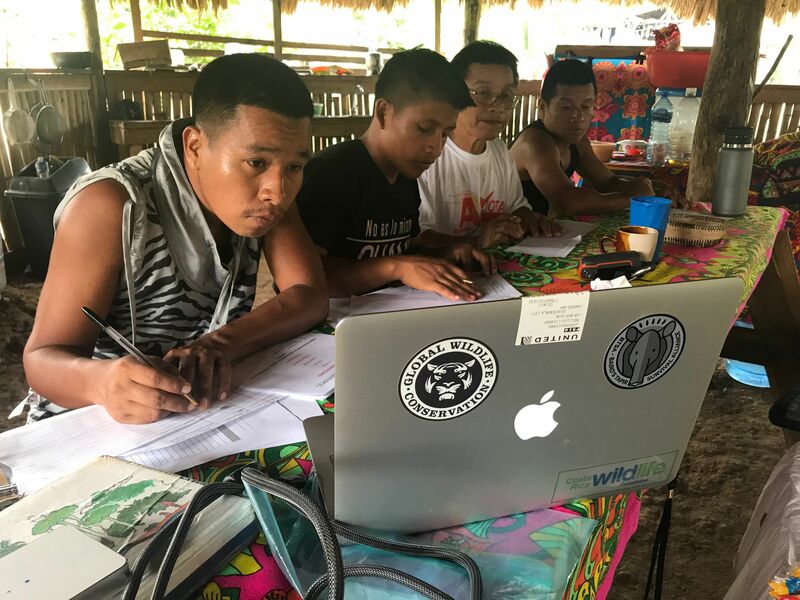 Emberá community rangers in Pijibasal, Panama (working with Yaguará Panama) (Photo by Chris Jordan, Global Wildlife Conservation).
Assessment is an essential starting point for any wildlife crime prevention strategy. To identify areas that require attention, we begin by analyzing wildlife and forest legislation, law enforcement measures, prosecutorial and judicial capacities, preventative interventions and the underlying drivers of wildlife crime. We assess the scale of the problem, gauge local capacity for prevention work and the community's willingness to engage (or not) before designing capacity-building programs that work for the long-term. Through this process, we help our local partners to develop comprehensive approaches that are highly tailored for each site to fit their specific needs and requirements.
- We've teamed up with Michigan State University to use modern conservation criminology, including situational crime prevention, to understand the root cause of illegal activities. This supports a science-driven approach to reducing snaring in Pu Mat National Park (Vietnam).
Technology
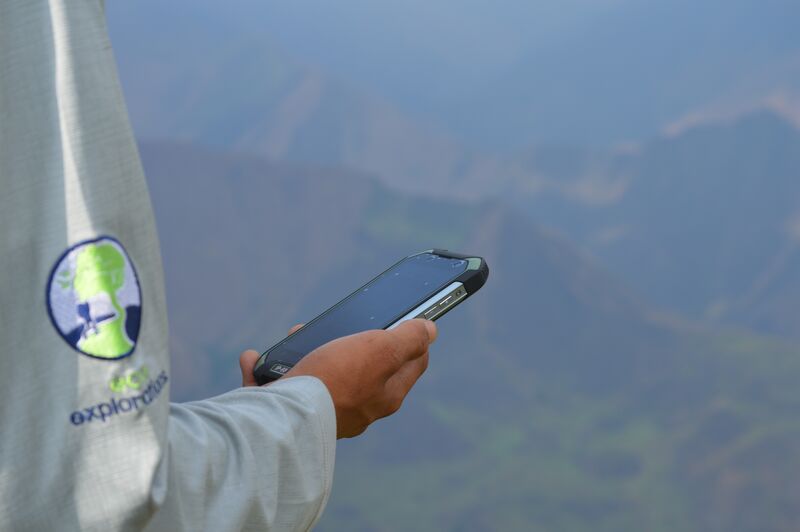 SMART training in Mts. Iglit-Baco Natural Park. (Photo by James Slade, Global Wildlife Conservation)
Technology has significantly helped enhance the efficiencies of anti-poaching efforts. As a member of the SMART partnership, GWC has helped develop and promote the use of a data-driven approach to anti-poaching efforts. SMART is a software application that enables teams to collect, store, communicate, and evaluate ranger-based data on patrol efforts. Through SMART, we're able to assess law enforcement effectiveness and threats to protected areas, ultimately helping us gain insights on how to support sites through adaptive management.
- GWC supports the Rhino Protection Units guarding the Javan Rhinos in Ujung Kulon National Park (Indonesia). We are advancing law enforcement operations, including introducing a real-time rapid-response system for both terrestrial and marine patrols.
- GWC is a training and implementation provider for SMART in Africa, Asia, Central and South America, and the Caribbean. Our goal is to continue to mentor and support skills development for SMART users around the world.
Capacity
 In the field with Zambezi Elephant Fund. (Photo by James Slade, Global Wildlife Conservation)
Rangers have one of the most essential roles in the protection of conservation areas. These brave men and women patrol the grounds for potential threats, monitor wildlife, conduct community outreach and many other roles. Rangers often put their own lives on the line. GWC works to support rangers directly through training and mentorship. GWC also provides access to health and safety support and the proper equipment, which are imperative for their success.
- GWC supports local community-driven ranger initiatives to empower indigenous peoples to
protect their territories and the biodiversity within them. Capacity building has begun for the indigenous rangers of the Rio Platano Biosphere Reserve in Honduras.
- Africa's second largest elephant population lives in the Zambezi Valley. As poachers threaten to wipe out this elephant population, GWC is supporting a collaborative effort amongst the valley's stakeholders, together with the Zambezi Elephant Fund, to implement SMART. We've enhanced field data collection, patrol effectiveness and adaptive management with SMART, by providing training to National Parks in the Zambezi Valley and to the Mushandike College of Wildlife Management.
Community
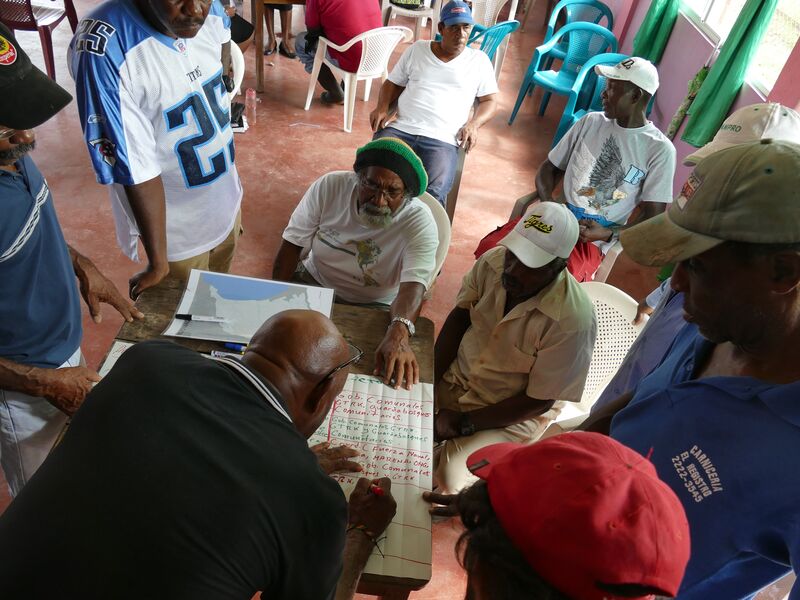 Community members participate in a protected area management planning workshop for Indio Maiz Biological Reserve, Nicagragua. (Photo by Mike Appleton, Global Wildlife Conservation)
The support and good will of the local communities living around wildlife areas is essential. Local actors are best able to identify the societal and cultural drivers of wildlife crimes within their communities and find ways to discourage the practice. These partnerships and networks with community crime prevention programs allow GWC to understand the dynamics on the ground faster and prevent the crime before it happens.
- Illegal hunting, burning and ranching threatens the Tamaraw, a dwarf buffalo species endemic to the island of Mindoro in the Philippines. To protect the Tamaraw's main habitat in Mts. Iglit-Baco Natural Park, GWC collaborates with local partners, including the Indigenous communities, on all matters relating to the park's protection and management.
- In the Indio Maiz Biological Reserve (Nicaragua), indigenous Rama and Kriol rangers and community members battle biodiversity loss, facing threats from illegal fishing, cattle ranchers, and even drug cartels. GWC helps support these forest protectors by providing the basic training and equipment needed to protect this lowland rainforest and its populations of jaguar, Baird's tapir and many other species of birds, reptiles and amphibians.
Cooperation
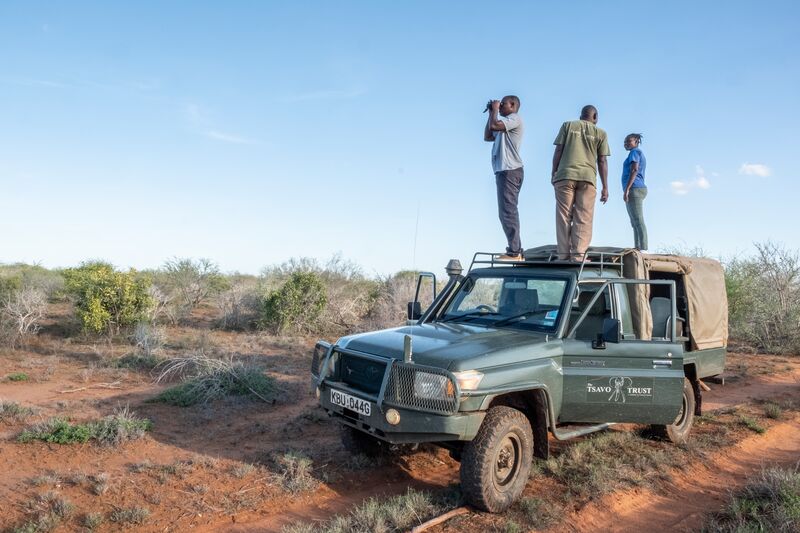 Rangers Kyalo, Christine and Catana of the Hirola Monioring Team with Tsavo Trust. (Photo by Robin Moore, Global Wildlife Conservation)
At the core of GWC's ethos lies cooperation. We collaborate with governments, NGOs, and regional and international networks who share our goals: wildlife crime prevention and species conservation.
This cooperation involves everything from partnerships with criminologists and international organizations supporting the safeguarding and improvement of protected areas, to building on local collaborations between partner organizations, communities, government agencies and more.
- GWC is a founding member of the Universal Ranger Support Alliance (URSA), a collaboration between FFI, Force for Nature, the International Ranger Federation, Panthera, World Commission for Protected Areas, WWF and ZSL to see positive change for protected area staff around the world. This Alliance supports the actions stated in the Chitwan Declaration in which over 500 rangers called for global improvement in the ranger occupation. The resulting URSA Action Plan identifies five areas for action: Advocacy and Representation, Ranger Sector Capacity, Employment and Welfare, Equality, Equity and Stewardship and Ethics, Conduct and Accountability.
Prosecution
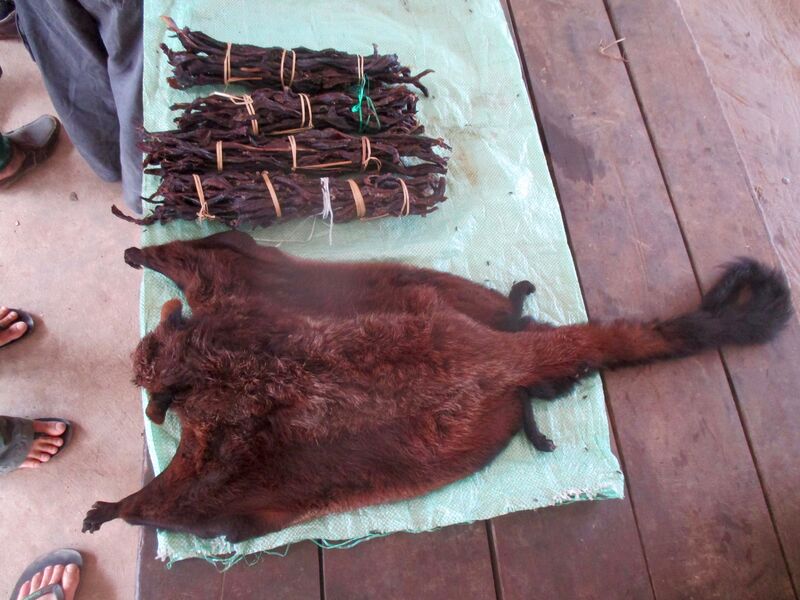 Bushmeat in Laos. (Photo by Andrew Tilker, Global Wildlife Conservation)
While GWC focuses on crime prevention, some cases ultimately do need to go through legal procedures. Securing convictions for wildlife crime requires a well-functioning judicial system – one that imposes sufficient penalties to deter would-be poachers. A strong judicial system also emboldens the enforcement officers to make the arrests, knowing their efforts will result in convictions.
Transnational environmental crime is the largest financial driver of social conflict in the world, and it accounts for 64% of illicit and organized crime finance. Given poaching's clear link to criminal networks, and that poachers are not generally operating alone, but rather as armed groups, serious penalties for these crimes are warranted.
Improving laws, increasing penalties, adding to investigative and forensic capacities, and raising awareness around the serious nature of these crimes are critically important in the zero-poaching toolkit utilized by GWC. We support sites in need of technical advice and support in strengthening their capacity for obtaining successful prosecutions.
- GWC provides technical support to build effective case monitoring systems (SMART) and to develop standard operating procedures in line with best practices and ethics.
- GWC supports local partner collaborations with universities, organizations and individuals within the conservation criminology realm to further their on-the-ground efforts towards prevention – to shift the focus from detaining offenders to deterring them in the first place.
GWC conserves the diversity of life on Earth by safeguarding wildlands, protecting wildlife and supporting guardians. We maximize our impact through scientific research, biodiversity exploration, habitat conservation, protected area management, wildlife crime prevention, endangered species recovery, and conservation leadership cultivation.