Poaching—the word may conjure images of large-scale organized crime, black markets and charismatic species like elephants, rhinos and tigers ("the big three").
But often overlooked are the hundreds of lesser-known species that are also being driven to extinction, fueled by poaching for meat, the pet trade, traditional and folk medicine and the desire for status symbols. Some species are simply caught up as "by-catch" in the hunt for other species. Many of these lesser-known species are actually more likely to go extinct than their better-known counterparts that receive more attention and anti-poaching funding.
To help save species threatened by illegal activity, GWC tackles multiple aspects of wildlife crime through an innovative and holistic approach. To accomplish this, GWC works closely with both local and international partners, including WWF, the SMART Partnership, the International Ranger Federation, the Ranger Federation of Asia, University of Central Florida and Michigan State University.
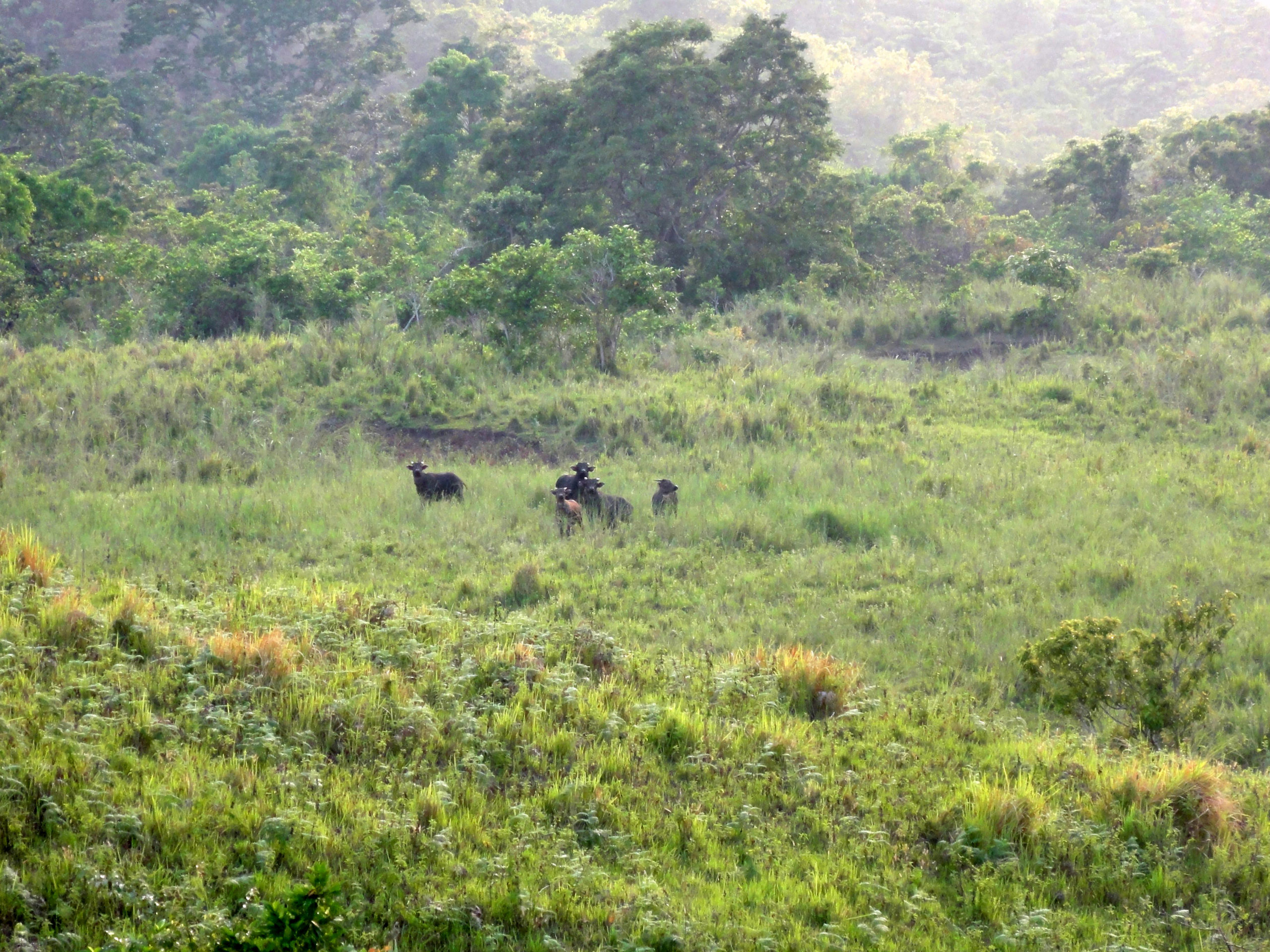 Group of Tamaraw, adults and young, in Mounts Iglit-Baco Natural Park (Photo by D'Aboville Foundation)
As a supporting member of the Zero Poaching initiative, Global Wildlife Conservation has developed comprehensive wildlife crime prevention strategies for several highly threatened species around the world: the Temminck's red colobus monkey, affected by deforestation for charcoal production; the Javan rhino and Tamaraw, impacted by poaching; the Saola, Large Antlered Muntjac and Annamite Striped Rabbit, all impacted by snaring.
Saola: Accidental Victims
The Saola, a wild cattle species endemic to the Annamite mountain range of Vietnam and Laos, is on the verge of extinction, with as few as 20 individuals remaining. Two other species endemic to the region, the Large-antlered Muntjac and the Annamite Striped Rabbit, are highly threatened.
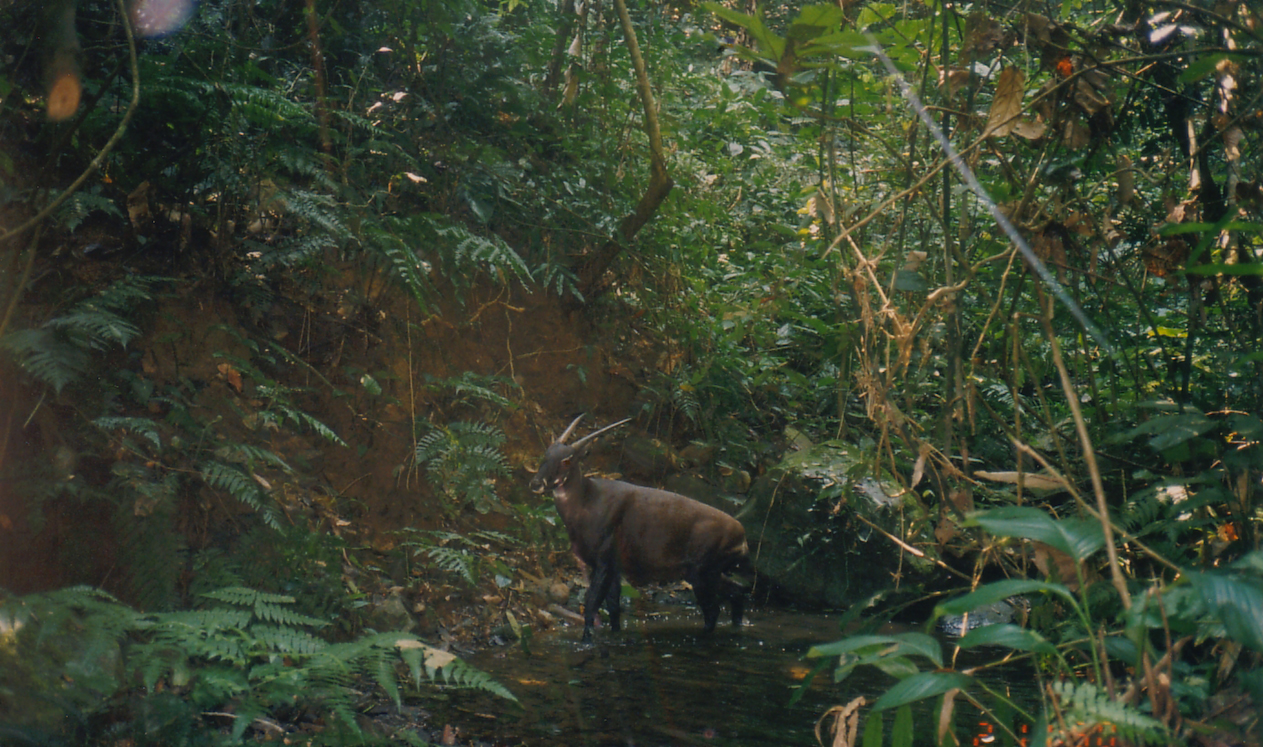 Wild Saola camera - trapped in central Laos (Bolikhamxay Province) in 1999. (Courtesy of Bill Robichaud)
The Saola are frequently so-called "by-catch," which means they are caught in poachers' snares intended for other animals in high demand at restaurants in Laos and Vietnam. The burgeoning middle class in southeast Asia and China has an unsustainable demand for illegal wildlife products. A recent WWF report on snaring in the region estimates that there are over 12 million snares present in the protected areas of Cambodia, Lao PDR and Vietnam, impacting over 700 mammal species. The scale of issue is leading to "Empty Forest Syndrome," clearing the forests of any ground-dwelling species that get caught in the traps, often left to die slowly and painfully.
GWC supports anti-poaching efforts, community conservation teams and building the capacity of rangers in Pu Mat National Park (Vietnam) to effectively combat species loss through collaboration, crime science, technology and capacity building. We do this using a single-support approach to wildlife crime prevention with the Vietnamese Forest Protection Department, combining the capabilities of partner organizations to act as one: FFI-Vietnam, Save Vietnam's Wildlife, Vinh University and Michigan State University.
The Decline of the Red Colobus: The Demand for Meat & Charcoal
Red Colobus Monkeys are slow-moving primates and large-seed dispersers, helping to maintain the health of the forests in which they live, from Senegal to Zanzibar.
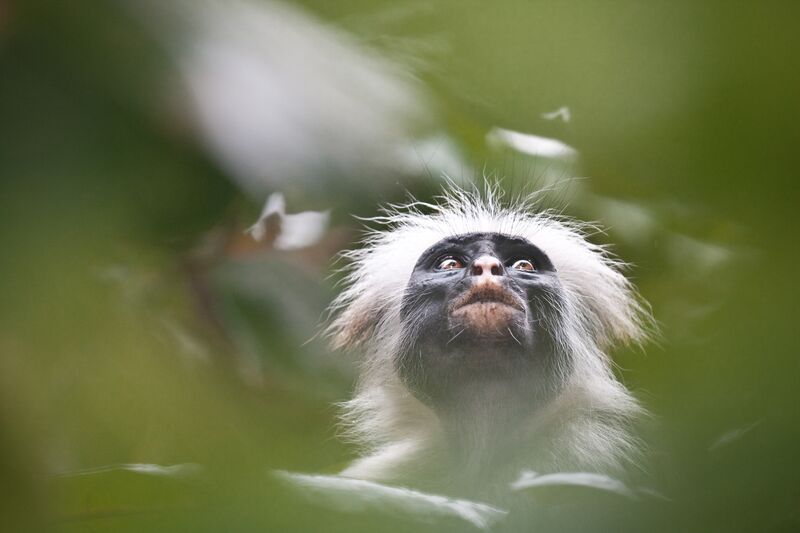 Zanzibar Red Colobus. (Photo by Robin Moore, Global Wildlife Conservation)
The most threatened group of non-ape primates in mainland Africa, they are hunted for bushmeat and also face habitat loss due to deforestation. Of the 18 Colobus species, five are classified as Critically Endangered on the IUCN Red List of Threatened Species. Because Red Colobus Monkeys' range overlaps with more than 75 percent of all primate species on mainland Africa, their protection would also benefit countless other species.
The Western red colobus monkey is just one of hundreds of species threatened by the bushmeat trade, which is growing in urban centers of Central and West Africa, where eating bushmeat is viewed as a status symbol. In Central Africa alone, scientists estimate that 1 million metric tons of bushmeat are consumed each year—which is unsustainable, and a tremendous threat to wildlife in some of the Earth's most biodiverse places.
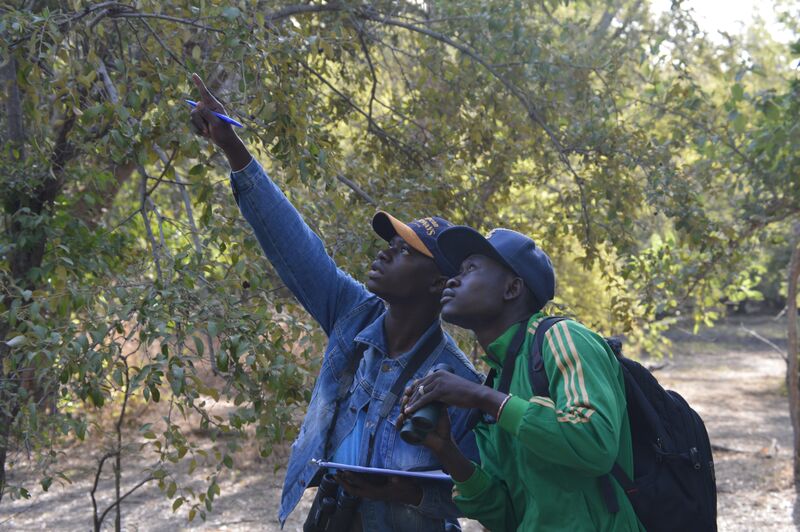 Red colobus rangers on a survey. (Photo by James Slade, Global Wildlife Conservation)
In The Gambia, GWC supports the protection of the Temminck's red colobus through the University of Cumbria and the Communities for Red Colobus project (C4RC). Temminck's red colobus (a subspecies of the Western red colobus) are listed as endangered, primarily due to habitat loss. Logging and deforestation, often for charcoal production or agriculture, has contributed to a 50% decrease in forest cover since 2013. The C4RC rangers work with the government, other NGOs and communities within the Temminck's range to reduce the impact of deforestation and prevent the growing threat of the bushmeat trade from reaching this vulnerable population.
The Javan Rhino: The last stronghold of the lesser one-horned rhino
Of the five species of rhinoceros in the world, two are restricted to Indonesia and both are Critically Endangered:
Javan Rhino are solely located in Ujung Kulon National Park, a peninsula off of Western Java. With only an estimated 72 left in the world in one location, their small population faces the threats of poaching, disease, volcanic eruptions, tsunamis and population decline due to their solitary nature and small, likely inbred, population.
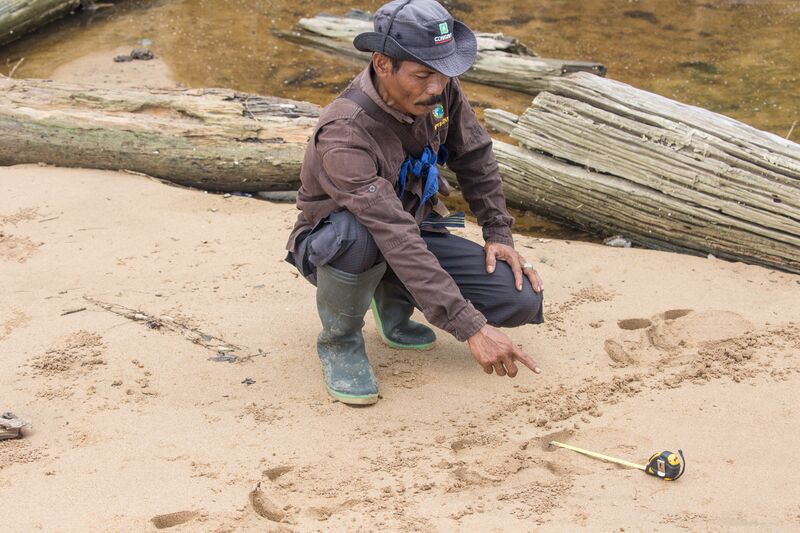 Rhino footprints in Ujung Kulon National Park, Java. (Photo by Robin Moore, Global Wildlife Conservation)
GWC supports Rhino Protection Units run by the Rhino Foundation of Indonesia (YABI) and the International Rhino Foundation (IRF), who patrol the thick, swampy forests of Ujung Kulon and the surrounding coastline for illegal activity, all under the management of the Indonesian Ministry of Environment and Forestry. Through these local partners, GWC is supporting a consistent park management framework engagement with local authorities and communities in developing long-term solutions to poaching.
In partnership with Wildlife Protection Solutions, GWC is also introducing a real-time protection system of camera-traps and monitoring which will enable rapid responses to incursions.
Tamaraw: An Endangered Icon
Small populations of the Critically Endangered and endemic Tamaraw reside on the island of Mindoro in the Philippines. These dwarf buffalo are iconic in Mindoro, having cultural significance to Indigenous communities. More recently, the Tamaraw has been printed on the country's currency, used sports teams' mascots and promoted as the national animal. Yet they remain under threat, especially to poaching pressure. In Mounts Iglit-Baco Natural Park, the largest population, less than 500 individuals are estimated to remain.
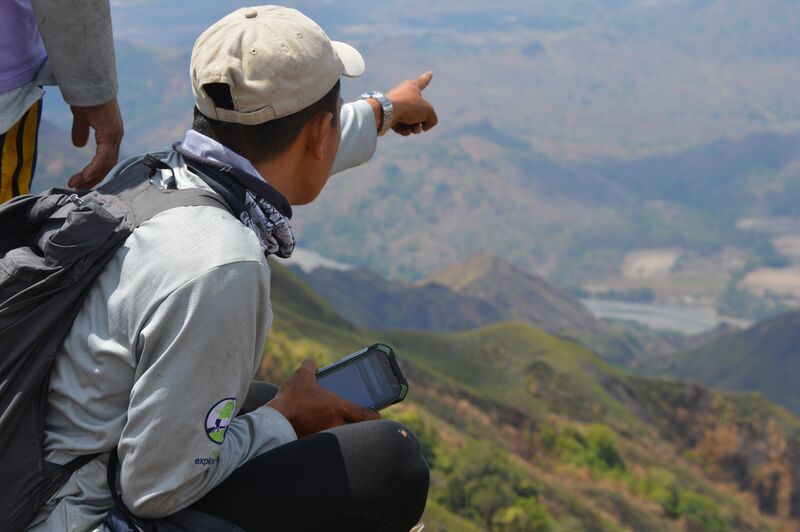 SMART training in Mts. Iglit-Baco Natural Park, 2019. (Photo by James Slade, Global Wildlife Conservation)
GWC collaborates with the Department of Environment and Natural Resources and their Tamaraw Conservation Program (TCP), local communities and other NGOs, through our partner the D'Aboville Foundation, to ensure a united approach to the conservation of the species. Crime prevention assistance to the TCP includes training, technical support and law enforcement/protection strategy support for the Mounts Iglit-Baco Protected Area Management Plan.
Baird's Tapir: Indigenous guardians protecting 'nature's gardeners'
The Baird's tapir is the largest of the three tapir species that live in Latin America. Known as "Gardeners of the Forest," these herbivores play a key role in shaping and maintaining healthy ecosystems by consuming a vast variety of plants, seeds and fruits and by dispersing seeds through their dung. Their habitat spans from Mexico to Colombia, yet they are globally Endangered and considered Critically Endangered in Panama, Nicaragua and Guatemala. Throughout Mesoamerica, an estimated 4,500 adult individuals remain. Their populations are particularly vulnerable to the negative effects of habitat disturbance and poaching due to their very slow reproductive cycle.
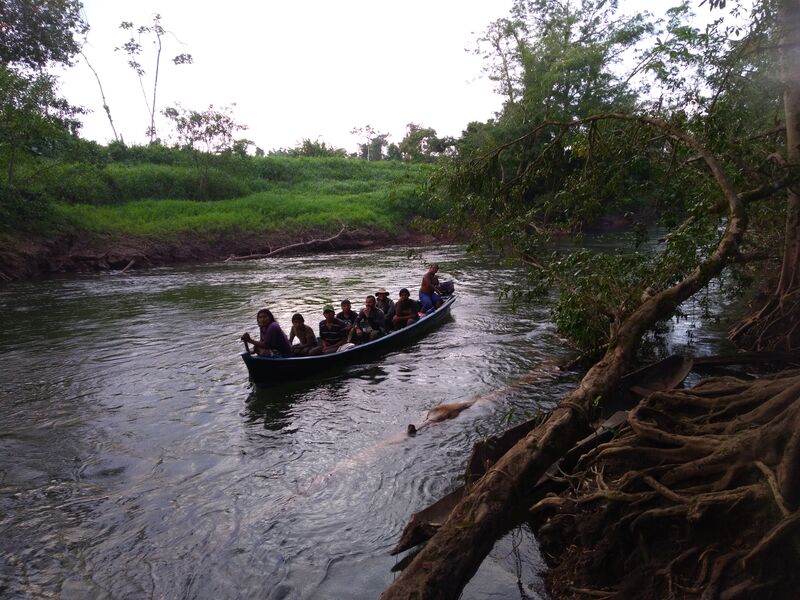 Indio Maiz Biological Reserve (Photo by Joel Betts)
While officially an illegal activity in all of its range, hunting has greatly impacted the Baird's tapir population size over the last 20 years due to increasing pressure from illegal settlers within protected areas. In many areas, the advance of the agricultural frontier is furthering habitat loss. In some areas, like the Indio Maíz Biological Reserve, these new settlers have also introduced the practice of fishing with pesticides in rivers and creeks as a means for increasing fish catch efficiency, poisoning the waters and all that rely on them.
In Indio Maíz, GWC partners with Rama and Kriol communities and the University of the Autonomous Regions of the Caribbean Coast of Nicaragua (URACCAN) to bolster local leaders' monitoring capabilities within the park and engaging lawyers to develop protocols for use in responding to and repelling illegal incursions. These are vital actions to protect the reserve and its biodiversity from threats, including poaching and pesticide use. GWC continues to work with the Rama-Kriol community forest ranger program, a team of indigenous and Afro-descendant rangers that we have trained and supported since 2015. GWC proudly supports the Baird's Tapir Survival Alliance and the Global Tapir Program.
(Top photo: Snares in central Vietnam. Photo by Andrew Tilker)
GWC conserves the diversity of life on Earth by safeguarding wildlands, protecting wildlife and supporting guardians. We maximize our impact through scientific research, biodiversity exploration, habitat conservation, protected area management, wildlife crime prevention, endangered species recovery, and conservation leadership cultivation.